
Plant Reproduction
❗Without bees, many of our plants will die.
Click Here to learn about plants to support bees and other beneficial pollinators.
❗Some plants may naturally contain harmful chemicals, Century plants contain saponins and calcium oxalate crystals that may cause redness, intense itching, burning, and sometimes severe systemic reactions upon physical contact. Research the plant you’re working with prior to working with it.
Reproduction usually takes place in the Spring or in warm environments contained within structures. Plants naturally reproduce or may be propagated in many ways:
◦ Roots (bulbs, clumps, division)
◦ Cuttings (rooted in soil or water)
◦ Seeds (sown in suitable substrate)
Roots
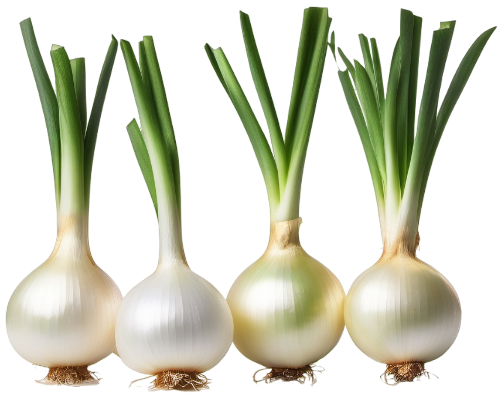
Root Bulbs
A root bulb is a type of root that is planted in the ground which produces a plant. Bulbs are characterized by a compacted stem at the bottom, with roots growing from it, and layers of modified leaves that surround a miniature flower or sprout in the center. The roots anchor the plant to the ground and absorb water and nutrients, while the leaves store food as an energy reserve for the plant to use to complete its life cycle.
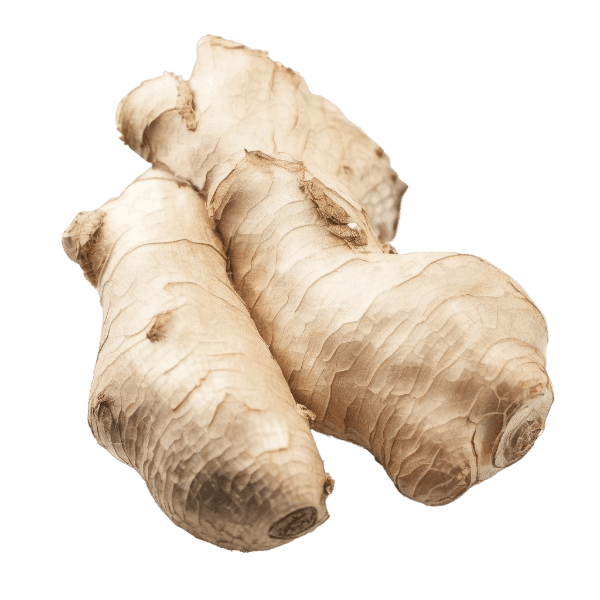
Root Clumps
Other plant varieties are clumped together, such as Bamboo and Ginger, and require physical force to separate. Uproot plants with clumps such as Bamboo, carefully cut the root ball in to halves or quarters (depending on size), being sure to keep foliage attached to the roots. Replant separated pieces and regularly water to keep the stressed plant alive and promote root growth.
Root Division
Some plant varieties have baby plants develop surrounding the parent plant, such as Banana and Bird of Paradise. Their roots are usually entangled as they grow close together. Carefully uprooting the entire plant (sometimes slight force to separate connected parts) and untangling the roots isolates the young plant(s) for replanting. Replant separated pieces and regularly water to keep the stressed plant alive and promote root growth.
Cuttings
NOTE: DO NOT TOUCH THE RAW, CUT END OF THE PLANT. The plant’s cut is susceptible to oils from human skin which could jeopardizing health by introducing harmful bacteria.
Rooting Cuttings in Water:
Cut 3″ to 6″ from a mature plant (do not take new and delicate growth). Remove the bottom 2″ to 3″ of leaves. Ensure an angled cut is the root end and the flat cut is the top end. Place in water in shaded sunlight (do not place in direct sunlight, this may wilt and kill the stressed plant cuttings) and wait for roots to grow. Replace the water with fresh water every day. Once roots are at least 3″ length, the rooted cutting may be planted in a pot or in the garden.
Rooting Cuttings in Soil
Cut 3″ to 6″ from a mature plant (do not take new and delicate growth). Remove the bottom 2″ to 3″ of leaves. Ensure an angled cut is the root end and the flat cut is the top end. Insert the cutting into a pot of moist, well-drained soil. Water regularly, keeping seeds moist so they successfully germinate, outdoors every 2 to 4 days during Summer when it’s hotter. Once the plant has developed a few inches of healthy leaves and stems, it may be transplanted into the garden or a larger pot.
Root End
Angled cut with more surface area allows more water to enter plant and assist with root development and leaf support.
Top End
Flat cut promotes with less surface area and promotes faster healing. The top cut should be no more than 1″ from other stems.
Seeds, Stratification, and Scarification
Stratification is necessary for specific plant varieties to activate seed germination and stop seed dormancy, common with cold resistant plant seeds.
Stratification exposes seeds to moist, dry, cold, or warm conditions to simulate natural conditions necessary for germination.
Some plants require a combination Stratification (depends on the variety of plant):
Cold❄️
Cold❄️
Warm🌡️
+
+
+
Dry♨️
Moist💧
Dry♨️
Scarification refers to physical force, chemical, or thermal interaction to penetrate the resistant seed coat that is impervious to water.
Usually, the plant’s natural environment provides this for the seed.
Avocado seed Exterior Removal
Avocado Seed Root growth
Some plants need both stratification and scarification for a higher percentage rate of germination!
Example: Althaea officinalis (Marsh Mallow, not Malva) naturally thrives in moist environments; cold + moisture = activated seed germination. The seed has a thick and resistant casing, protecting the tiny embryo (1/12th of 1″!)
Explanation: Scarification diminishes the seed case, allowing the seedling to emerge easier. After scarification is cold + moist stratification. Frigid temperatures imitate Winter weather, which causes seeds to go dormant. Dormancy is a natural defense for seeds to survive the Winter. Mallow plants prefer moist environments, and the cold with moisture added helps to soften the seed’s remaining casing.
Sowing
Sowing is the planting of a seed into a suitable substrate.
Depth, or how deep to plant, requirements vary for seeds. Some seeds are powerful, capable of bursting up through any substrate, including hardened clay. Other seeds are frail at first, requiring a thin layer of loose, loamy soil to delicately emerge from!
Spacing must be considered when sowing seeds. Too close causes crowding, which can inhibit healthy growth. When leaves of competing plants cover one another up, there is less sunlight to enable photosynthesis. Too far, and pollination to produce fruit and seeds may not occur, such as with Corn. Planting Corn close enough in properly spaced rows allows for the pollen to be wind-dispersed, causing fertilization from plant to plant.
Thinning is the removing of closely spaced seedlings. This should be done when the seedling is old enough to transplant elsewhere (at least 3″ to 6″ height).
Sexuality
Sexual reproduction occurs in plants with the help of flowers.
Dioecious: Male flowers and female flowers occur on separate plants (one plant is a boy, the other is a girl.).
Monoecious: Male and female flowers occur on the same plant (one plant is both boy and girl, hermaphrodite.).
Homogamy: Male and female reproductive organs develop at the same time, allowing asexual reproduction (self replication).
Dichogamy: Male and female reproductive organs develop at different times, preventing asexual reproduction (cannot self replicate).
Avocado trees are dichogamous. New flowers starting as either male or female, then transitioning into the opposite gender a day later in order to self replicate. The starting gender depends on the variety of Avocado tree, either type A or B flowers. The variety of Avocado will determine if the flower begins as a female or male. Once pollination occurs, the flower eventually withers and seeds begin to form.
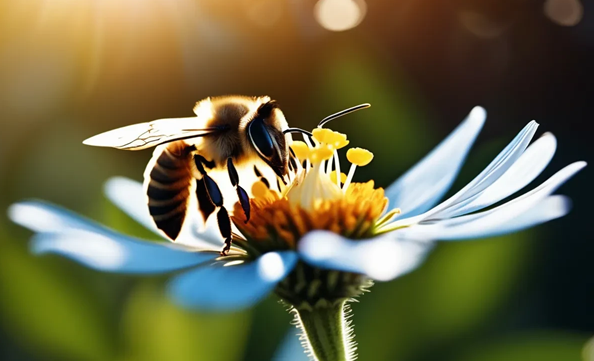
Pollination
Pollination is the process of transferring pollen from male flowers to female flowers to reproduce, caused by bees, the wind, or by an interjecting entity (such as robot).
Pollen is produced by anthers (the male reproductive organ that exists on most flowering plants) and is used by many animals as a source of food, such as hummingbirds, bats, butterflies, ants, bees, etc. Bees use pollen as a protein and nutrient-dense food source for their larvae. Bees also transfer pollen when buzzing from plant-to-plant, naturally pollinating the plants.
Nectar is a sweet substance that is produced to lure pollinating creatures in order for pollination to occur. Honeybees bring nectar back to their colony for honey production. Nectar fuels the bees as they work nonstop throughout the day, visiting about 1,000 flowers per trip and usually making 5 to 15 trips per day. That’s up to 15,000 flowers. Plants renew nectar every 20 minutes to 24 hours, depending on the plant. Agave plants create tons of nectar each evening with their night-blooming flowers, specifically to attract bats. Only plants that are visited by creature pollinators produce nectar.
🐝Pollinator bees lack a stinger, do not live in a colony, and pollinate approximately 2,000 flowers a day! Honeybees have stingers and collect nectar from flowers.
Wind pollinated flowers are usually small, inconspicuous, and have no sweet aroma or nectar. The flower anthers may produce a large number of pollen grains which are lightweight, while the stamens are generally long and protrude out of flower. This pollen has low nutritional value and is a last resort pollen food source sought by insects, who prefer the insect-pollinated pollen with higher nutritional content. For wind pollinated plants to produce so much pollen, the energy of the plant goes for quantity over quality to ensure it has enough pollen to ensure success of wind dispersal for reproduction. Extra pollen is created by the plant in anticipation of pollen loss due to the wind chaotically blowing pollen away from it’s intended destination, the stigma of the female flowers.
Survival Instincts

 Vegan Botany