
This is for informational purposes only. For medical advice or diagnosis, consult a professional.
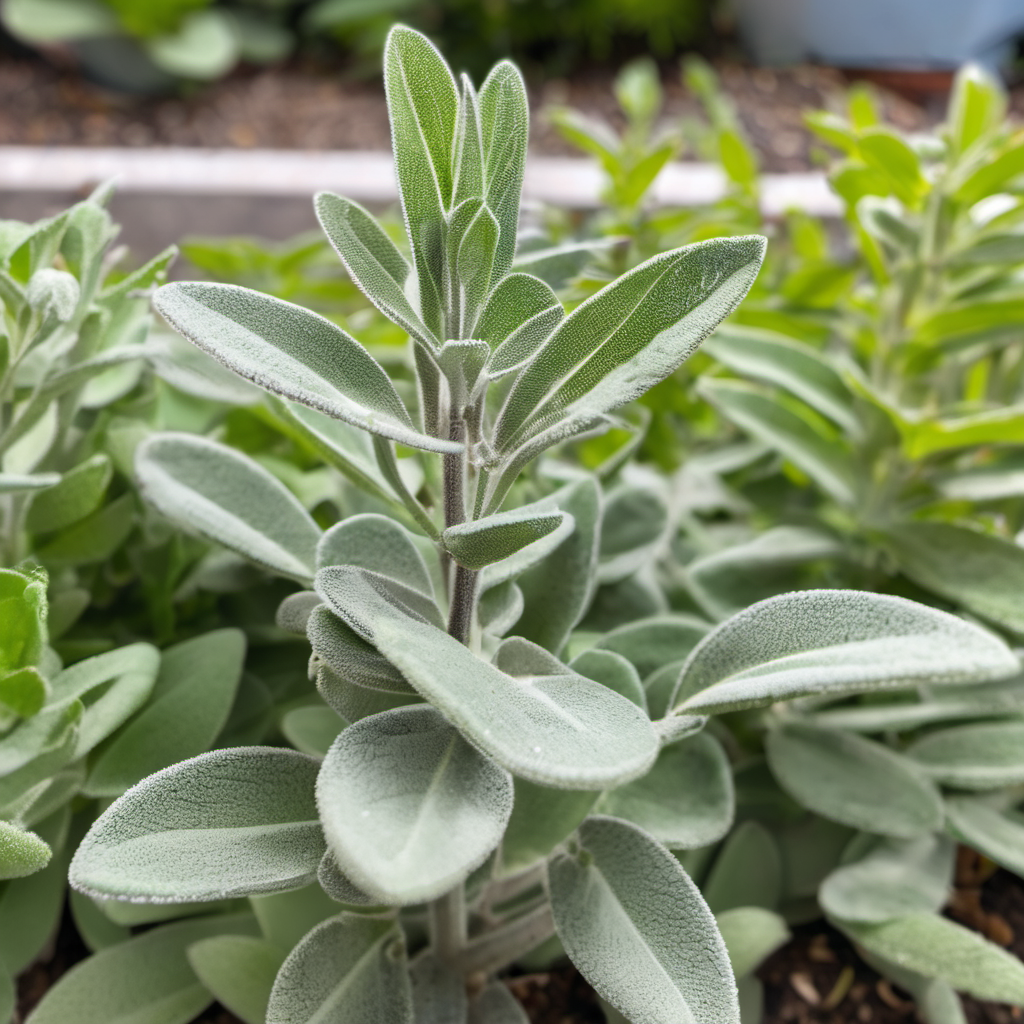
▷ IDENTIFICATION🔍
Common Name: Sage
Botanical Name: Salvia officinalis
Family: Mint family (Lamiaceae)
Aromatic, drought-tolerant annual or perennial evergreen shrub for Zones 4 to 10
PRECAUTION: Contains moderate thujone content. May interact with many medications. Not appropriate for all, consider consulting a doctor first. See section “ADDITIONAL INFORMATION > Animal Toxicity and Medicine Interactions”.
❗Children, epileptic, pregnant, or breastfeeding: This plant may be harmful if used internally for young children, epileptic, pregnant or breastfeeding mothers. Research or speak with a healthcare professional. 🚼
▷ OTHER NAMES & LOOKALIKES 🏷️
Other Names 🏷️
The word “salvia” is derived from the Latin word “salvere“, which means “to save” or “to be in good health”.
◦ Common Sage
◦ Garden Sage
Lookalikes 🔎
◦ Russian Sage: Perennial herb in the mint family with tall spikes of purple flowers. It needs well-drained soil and lots of sunlight to bloom and stay upright.
◦ Anise-Scented Sage: Also known as Hummingbird Sage, this plant prefers full to three-quarter sun. It’s an annual in most areas, but can be a tender perennial in warmer climates. Its leaves have an anise-like aroma.
◦ Veronica: Perennial with spiky flowers that come in white, pink, and purple.
◦ Scarlet Sage: A perennial plant native to Brazil, however often grown annually in colder climates. It has a long blooming season and produces burgundy flowers, but cultivars can also be pink, blue, lavender, orange, or white.
◦ Pineapple Sage: A salvia that looks, grows, and tastes different from common sage. Pineapple sage is used in fruit and sweet dishes, while common sage is used in sausage, poultry dishes, and herb blends.
▷ APPEARANCE 🪞
Plant Description🌿🗒️
Branched shrub with a beautiful scent, excellent for attracting pollinators. A soft fuzz covers the edible silver-green leaves which are oblong-lanceolate in shape, 3⅓” length and 1″ width, arranged opposite on square stems. Flowers are small, two-lipped, and purple to blue-purple, appearing in whorls on spike-like inflorescence.
Dimensions, Root Depth, and Spacing 📏↔️
Height: 1.5′ to 2.5′
Width: 2′ to 3′
Root Depth: 14″+ deep; Ideal minimum container size 8 gallons to 10 gallons. Larger containers allow plants to grow taller and wider!
Spacing: 18″ to 24″ apart
Flower Season and Fruit or Seed 🌻🍎🫘
Flower: Fragrant, purple to blue-purple growing in whorls along tall inflorescence
Seed: Small, round, brown or black, ¼ centimeter diameter
▷ REPRODUCTION🌱
Sexuality: Hermaphrodite
Pollination: Bees, butterflies, hummingbirds, and other beneficial pollinators
Growth Rate: Moderate
Propagation:
◦ Layering: Select a thick stem that is long enough to lay in nearby container of soil. Remove leaves from the middle section of the stem, this part of the stem will be planted carefully and directly into the soil while still attached to the plant. Water as is necessary to keep soil consistently moist, especially during the Summer. Roots should form on the buried stem in a month, and may thereafter be cut and replanted into individual pots.
◦ Cuttings: Plant cuttings ⅜” to ½” diameter (the wider the stem, the higher percentage of success) and 4″ to 6″ tall. Add cuttings to water and change the water every day for 1 month until roots form, later planting in soil in a container, or propagate by planting in soil during the Spring. Protect the new plant by placing it in partial sun or under a grow light until it has matured, avoiding direct sun.
Seed Germination: Cold stratification for seeds in a moist environment in the fridge for 30 days may speed up germination. Soil pH 6.0 to 6.5, a soil ph of 5.6 to 7.8 is tolerable, at preferably 65°F to 75°F kept moist, however not wet or dry. Plant seed ¼” deep, emerges 7 to 21 days after being sown. Germination rate of 60% to 85% (depending on producer).
Indoor Planting: Grow plant for 1 year prior to transplanting outside 12 to 14 weeks after last frost date.
Outdoor Planting: Plant seed 10 weeks prior to last frost date.
▷ REQUIREMENTS❤️
Sunlight, Water, Fertilizer, and Pruning ☀️💧✂️
Sunlight: Prefers 6 hours to 8 hours full sun; Tolerates partial shade, however stem growth habit will be sprawled out. Proper lighting develops the flavor.
Note: Avoid aerial watering, which encourages fungal growth and disease.
Outdoor Watering: Water regularly during Summer (every 2 to 4 days) and less frequently in the Winter (1 to 3 times per month, more often if a warm climate). Intolerable of wet soil. K-cup seed starters need water every day during Summer and every 2 days during Winter. Small pots require watering more often, especially if exposed to full sun, while large pots and shaded pots need less water.
Indoor Watering: Deep and infrequent, allowing for soil to dry on the top layer prior to more water.
Drought Resistance: High drought tolerance
Fertilizer: Doesn’t usually need fertilizer. A small amount of 10-10-10 organic fertilizer 1 to 2 times each year, either in Spring or Early Summer if needed. Alternatively, add organic matter to the soil before planting. Scatter evenly at the base of plants, avoiding clumps of fertilizer and preventing contact with stalks and stems. Large clumps of fertilizer won’t evenly supplement nutrients into the entire soil surface after it mixes with water from rain or irrigation. Fertilizer clumps around the base of plants make cause the main stem to rot or have contact burns, which could damage or kill the plant. Do not throw fertilizer over plant tops, as the clumps of fertilizer caught in between leaf nodes and on foliage may either burn or rot the foliage.
Pruning: Avoid pruning during Winter as it may kill the plant. This same rule applies for the Fall in northern climates. After flowering, reduce the height by ¼ at most if desired. Remove withered flowers, dead leaves, and leggy or dead stems to enhance the plant’s appearance. This also promotes new stems to appear with more leaves and flowers.
Soil, Planting, and Environment 🌄🏞️🏜️
Soil: Prefers well-drained, sandy or loamy soil
pH: 5.6 to 7.8
Planting: When planting a potted plant, dig a hole that’s as deep as the pot and as wide as the root base. For plants with wide roots, dig a hole that is twice the width of the pot and gently space out the root system and then cover with soil to promote healthy growth. Burying tangled roots could cause health issues or stunted growth. The soil should be gently pressed in or watered in to fill the air pockets, preventing soil from collapsing in when watering or raining. Unplanted roots add to the stress of plants and could cause health problems or diseases. Cover every root with soil and smooth the soil’s surface.
Habitat: Native to the northern Mediterranean’s shores. Found in dry meadows, rocky grasslands without trees, mountain slopes, hillsides, and coasts.
Temperature Preference and Temperature Tolerance🌡️
Temperature: Prefers 70°F to 85°F during the day and 50°F to 60°F at night
Heat Tolerance: 95°F; Does not like hot, humid weather. High drought tolerance
Cold Tolerance: 5°F if the soil is well-drained. Mulch roots to retain water and to protect the root system from the cold during Winter. Keep dead leaves on the plant during Winter as a shield to protect the plant, then cut back in the Spring to promote new foliage growth.
Salt, Wind, and Pollution Tolerance 🧂💨 ☣️
Salt Tolerance: Low tolerance
Wind Tolerance: Low tolerance
Pollution Tolerance: Low tolerance
▷ ADDITIONAL INFORMATION📚
Description 📝
Sage is native to the Mediterranean and the western Balkan Peninsula, though it has been naturalized in many places throughout the world.
Attract and Repel Wildlife🐝🦋🐦🐌🪰🐇🦌
Deer and Rodent Resistant?🦌🐇🐁
Attracts: Bees, butterflies, hummingbirds, and other beneficial pollinators
Repels: Mosquitoes, cabbage moths, beetles, black flea beetles, and carrot flies
Diseases and Pests🐜🦠
Note: Proper care keeps plants resilient and healthy, preventing diseases and pests. This list details the potential threats, specific diseases and pests vary depending on environmental climate.
Diseases:
◦ Alternaria Leaf Spot
◦ Anthracnose
◦ Botrytis Rot
◦ Downy Mildew: A destructive disease that may become widespread if left uncontrolled.
◦ Fungal Leaf Spot
◦ Leaf Spot: A diseased or discolored area on a leaf caused by a plant disease or injury. Leaf spots may be caused by fungi, bacteria, or viruses, or by injuries from insects.
◦ Phytophthora cryptoea
◦ Powdery Mildew: Disease caused by a fungus due to overwatering or overcrowding, making the plant vulnerable to other pests and diseases
◦ Root Rot: Affects the roots of plants growing in wet or damp soil, may be lethal to both indoor and outdoor plants.
◦ Rust: This fungal disease is caused by more than 7,000 species of fungi. It affects the aerial parts of plants, most commonly the leaves, plus the stems, flowers, and fruit. Each type or plant rust has its own distinctive symptoms, such as bright red, orange, yellow, or brown spots on the leaves. As spores form, the spots turn reddish-orange and eventually black.
◦ Stem Rot
Pests:
◦ Aphids: Small, soft-bodied sucking insects which pierce plant tissues and draw out the juices.
◦ Scale: Parasite that infest a plant’s leaves and stems and suck sap from plants through their mouth parts. Heavy infestations cause yellowing or wilting of leaves, stunting or unthrifty appearance of the plants, and eventually death of all or part of the plant.
◦ Snails and Slugs: They eat a wide variety of plants, including young seedlings, mature plants, and turfgrasses, and may cause damage to gardens and flower beds.
◦ Spider Mites: They feed by bruising plant cells with their small, whiplike mouthparts and ingesting the sap. Spider mites produce a fine silk webbing, often found at leaf nodes or the undersides of leaves, which may kill plants or cause serious stress to them.
◦ Whiteflies: Flying insects that suck the sap from plants.
Animal Toxicity and Medicine Interactions ☠️❤️🩹
Sage contains moderate levels of thujone, and should be used sparingly. Thujone is a chemical compound found in specific herbs and is toxic in high amounts. Pregnant, breastfeeding mothers, and young children should avoid consuming thujone. Consuming excessive thujone may cause nausea, vomiting, abdominal cramps, dizziness, seizures, damage to the liver and nervous system, coma, or death. Thujone toxicity is higher with concentrated forms like teas, extracts, and oils. Thujone consumed from common culinary use of these herbs now and then is considered safe for consumption.
High Thujone Content: Wormwood (do not eat) and Mugwort
Moderate Thujone Content: Holy Basil, Sage, and Yarrow
Low Thujone Content: Thai Basil and Sweet Basil
Animal Toxicity: Safe for dogs, cats, and horses.
ASPCA Website – Toxic and Non-Toxic Plants “Sage”
Medicine Interactions:
Individuals may have a sensitivity or allergies to Sage, consult a healthcare professional first and proceed at own risk.
◦ Diabetes medication: Taking sage along with diabetes medications might cause blood sugar to drop too low. Monitor blood sugar closely.
◦ Antihypertension medication (High blood pressure medication): Sage might lower blood pressure. Taking sage may excessively lower blood pressure and strengthen the effect of blood pressure medications.
◦ Anticonvulsants (Seizure medication): Sage may increase the risk of seizures. Taking sage may decrease the effects of medications used to prevent seizures.
– Sedative medications (CNS depressants or Benzodiazepines): Sage may cause sleepiness and slowed breathing. Sedatives may also cause sleepiness and slowed breathing. Taking sage with sedative medications may cause breathing problems and excessive sleepiness.
◦ Cholinergic medication (for Glaucoma, Alzheimer disease, etc.): Sage can increase a chemical in the body called acetylcholine. Medications that also increase acetylcholine levels may increase the chance of side effects.
◦ Anticholinergic medications: Sage can increase a chemical in the body called acetylcholine. Taking sage may decrease the effects of anticholinergic drugs, which block the effects of acetylcholine in the body. Sage may increase acetylcholine levels.
◦ Estrogen: Sage might act like estrogen in the body. Taking sage along with estrogen might decrease the effects of estrogen.
◦ Medications changed by liver (Cytochrome P450 2C9 [CYP2C9] substrates), (Cytochrome P450 2C19 [CYP2C19] substrates), (Cytochrome P450 2D6 [CYP2D6] substrates), (Cytochrome P450 2E1 [CYP2E1] substrates), (Cytochrome P450 3A4 [CYP3A4] substrates). Sage might change how quickly the liver breaks down medications prone to being changed or broken down by the liver. This could change the effects and side effects of these medications.
◦ Medications moved by pumps in cells (P-glycoprotein substrates): Some medications are moved in and out of cells by pumps. Sage may change how these pumps work and change how much medication stays in the body. In some cases, this might change the effects and side effects of a medication.
WebMD Website – Sage “Interactions”
Use and Harvest⚕️🌾
❗Never ingest essential oils, instead use organic fresh or dried herbs.
Use: Sage is often dried and used as a spice in cooking or in medicinal practices. This herb is commonly in many European cuisines, including Italian, Balkan, and Middle Eastern. In British and American cooking, it is traditionally added with onion for stuffing recipes. Some species of sage, including common sage, contain a chemical called thujone. Excess thujone may cause seizures and damage the liver and nervous system. ⅛ teaspoon to 1 teaspoon every other day. Use for no more than 3 months, then stop taking for 1 or 2 months prior to taking again.
◦ Flowers: Fragrant and spicy, should be used sparingly. May be used for potpourri, dried herbs, pickled, or garnishes.
◦ Leaves: Culinary uses are for sauces, marinades, stir-fry, soups, salads, dressings, flavored salt, flavored oil, and garnishes. Externally applied in the form of herbal oil, poultice, salve, cream, or therapeutic tea soak. Leaves are ideal for hygiene products, such as balms and soaps with their astringent and cleansing properties that can soften and clean skin by removing dead skin cells. The fragrance is popular with soaps and cosmetics with its pleasant aroma.
◦ Essential Oil: Click Here for Precautions, Instructions, and Dilution Ratios
Benefits: Antioxidant (protects cells), anti-inflammatory (reduces internal and external swelling), antibacterial, antiviral, antifungal, antidisease, astringent, diabetes (high blood sugar), stress, abdominal cramps, digestive problems, diarrhea, bloating, menstrual cramps, menstrual bleeding, menopause, prevents infection, colds (flu and influenza), fever, cough, respiratory tract infection (bronchitis, chest congestion, pharyngitis, and whooping cough), lowers cholesterol, improves memory and thinking, oral health, tonsillitis, throat infections, bad breath, excessive perspiration, and reduces signs of aging
Dosing: ⅛ teaspoon to 1 teaspoon 2 to 3 times maximum each week. Use for no more than 3 months, then stop taking for 1 or 2 months prior to taking again.
Click Here for How To Harvest, Dry, and Properly Store Herbs and Seeds
Harvest: Never harvest more than 20% of a plant’s leaves or roots!
◦ Flowers: From March to August.
◦ Leaves: Leaves lose their aroma after flowering. Best to harvest from Spring to Summer.
◦ Seeds: Harvest the dry, brown, crunchy flowers from Summer to Fall. Follow harvesting techniques in the link above to extract and properly store the seeds.
Aroma, Flavor, and Culinary Combinations🧼🍴
Leaves lose their aroma after flowering.
Aroma: Herbaceous and woody with notes of eucalyptus and camphor
Flavor: Strong, savory, herbaceous, slightly bitter
Culinary Combinations: Sweet basil compliments herbs and spices (thyme, rosemary, oregano, bay leaf, parsley, nutmeg, cardamom, cumin, coriander, chamomile, goldenseal, elderberry, and chives), quinoa, whole wheat enriched pasta, wild rice, beans (sugar snap peas, green beans, chickpeas [garbanzos], black, pinto), legumes (lentils, mung beans), tofu, tempeh, mushrooms, nuts (roasted cashews, almonds, walnuts, pecans, and pine nuts), vegetables (arugula, cabbage, broccoli, cauliflower, Winter squash [pumpkin, butternut squash, acorn squash], Summer squash [zucchini, straightneck, and crookneck], sweet potato, red potato, white potato, eggplant, zucchini, garlic, lemongrass, bell pepper, carrot, beet, asparagus, brussels sprouts, radish, tomato, and cucumber), and fruits (cranberries, apricot, apple, pineapple, mango, papaya, citrus [lemon and lime], and figs)
Click Here to explore a comprehensive list of vitamins, minerals, and nutrients with function explanations, deficiency or excess symptoms, and vegan food source rankings (high, medium, low)
History 📜
In 1500 BC Egyptians used sage to treat respiratory, oral health, and digestion problems. The Greeks and Romans used sage for medicine and as a spice for culinary recipes.
Lifespan⏳
3 years to 10+ years longevity for life expectancy.
 Vegan Botany