
The information provided on this site is for educational purposes only, please consult with a qualified healthcare professional regarding your specific health requirements.
🐝🦋 Popular pollinator attractor
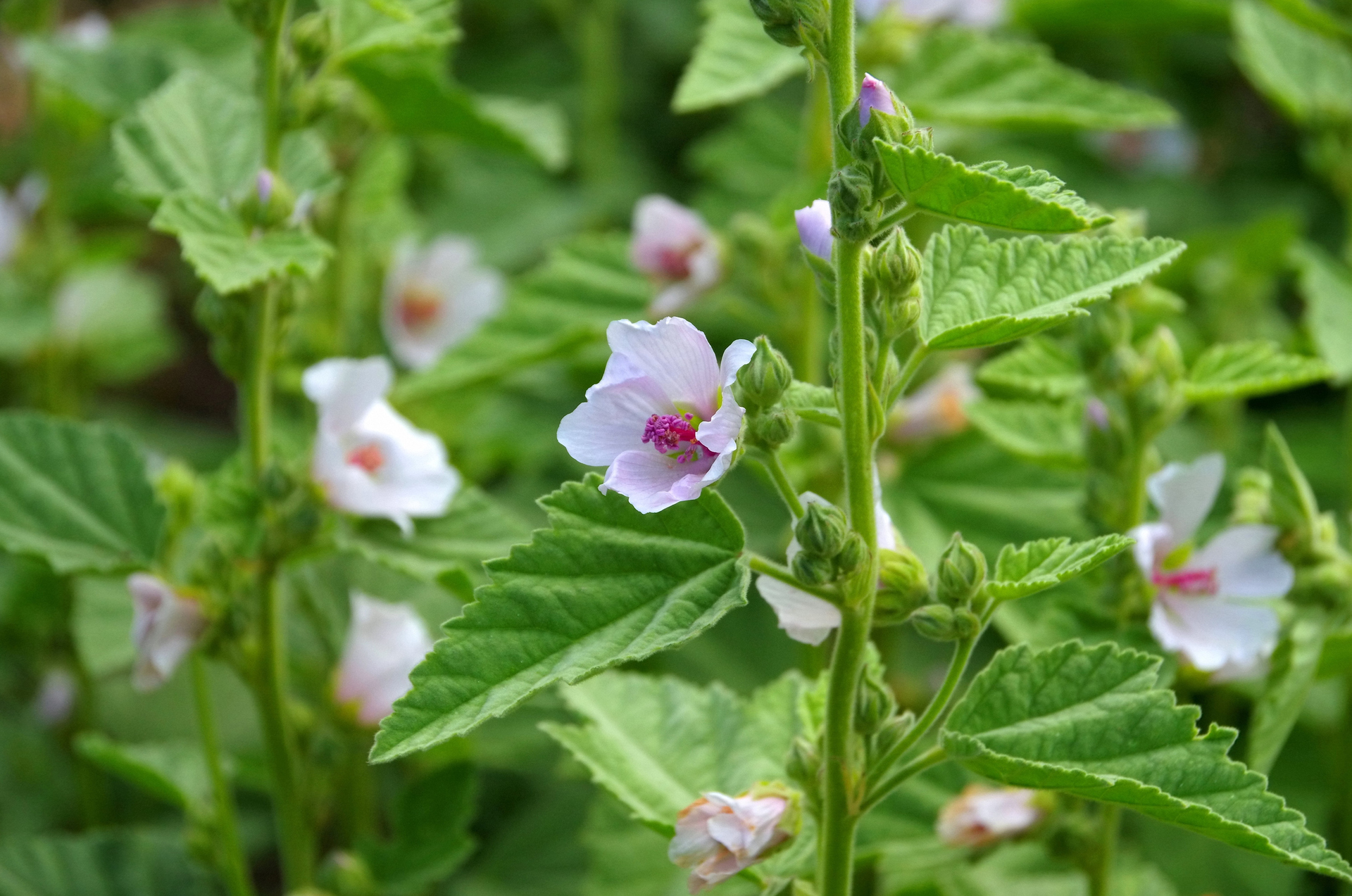
▷ IDENTIFICATION🔍
Common Name: Mallow
Botanical Name: Althaea officinalis
Family: Mallow family (Malvaceae)
Cold-hardy herbaceous perennial for Zones 3 to 9
PRECAUTION: May interact with medication absorption and anticoagulants. Not appropriate for all, consider consulting a doctor first. See section “ADDITIONAL INFORMATION > Animal Toxicity and Medicine Interactions”. Take mallow root doses for a month, then discontinue use for two weeks before recontinuing..
❗Mallow might increase risk of bleeding.
Children, epileptic, pregnant, or breastfeeding: This plant may be harmful if used internally for young children, epileptic, pregnant, or breastfeeding people. Research or speak with a healthcare professional. 🚼
▷ OTHER NAMES & LOOKALIKES 🏷️
Other Names 🏷️
◦ Marshmallow
◦ Marsh Mallow
Lookalikes 🔎
◦ Hollyhock (Alcea rosea): Has similar flowers, which are showy and come in shades of pink, red, and white.
◦ Common Mallow (Malva sylvestris): Has slightly larger flowers.
◦ Musk Mallow (Malva moschata): Has stem leaves that are deeply divided into 5 to 7 parts.
◦ Prairie Mallow (Sidalcea): Also known as “miniature hollyhock”, it’s slender and upright, and flowers for weeks in midsummer.
◦ Buttonweed (Malva neglecta): Also known as “cheese plant” and “cheeseweed”, it has fuzzy, gray-green leaves and 5-petaled flowers that can be white, light pink, or light purple.
▷ APPEARANCE 🪞
Plant Description🌿🗒️
Leaves are soft and velvety, arranged alternating on upright and erect stems. Each leaf is round, ovate, or cordate in shape, recessed veins, with 3 to 5 lobes and irregularly toothed margins. Flowers appear singly in small clusters in the leaf axils towards the tops of the stems. Flowers are 1.5″ diameter, with 5 pale lilac or pale pink petals and 5 shorter green sepals. Roots have a clumpy growth habit, roots resembling a carrot.
Dimensions, Root Depth, and Spacing 📏↔️
Height: 4′ to 6′
Width: 2.5′ to 4′
Root Depth: 12″ deep and ⅘” thick; Ideal minimum container size 7 gallon or 8 gallons. Larger containers allow plants to grow taller and wider!
Spacing: 2′ to 2.5′ apart
Flower Season and Fruit or Seed 🌻🍎🫘
Flower: Pale lilac to pale pink flowers from Summer to early Fall.
Fruit: Button-like appearance ⅖” in diameter, forming green later turning brown.
Seed: Tiny, flat, shiny, brown seeds that are reniform in shape.
▷ REPRODUCTION🌱
Sexuality: Hermaphrodite
Pollination: Primarily pollinated by bees, also pollinated by other beneficial insects
Growth Rate: Fast; 2 to 3 years for maturity for root harvest
Propagation:
◦ Layering: Select a thick stem that is long enough to lay in nearby container of soil. Remove leaves from the middle section of the stem, this part of the stem will be planted carefully and directly into the soil while still attached to the plant. Water as is necessary to keep soil consistently moist, especially during the Summer. Roots should form on the buried stem in a month, and may thereafter be cut and replanted into individual pots.
◦ Roots: Wait for plant to die back and become dormant in the Late Fall or Winter. Carefully dig up plant and divide roots in to separate pieces to replant.
◦ Cuttings: Plant cuttings that are , ⅜” to ½” diameter (the wider the stem, the higher percentage of success) and 4″ to 6″ tall. Add cuttings to water and change the water every day for 1 month until roots form, later planting in soil in a container, or propagate by planting in soil during the Spring. Protect the new plant by placing it in partial sun or under a grow light until it has matured, avoiding direct sun.
Seed Germination: Cold stratification for seeds either dry or in a moist environment in the fridge for 28 to 42 days may speed up germination. Soil pH 6.0 at 60°F to 70°F kept moist, however not wet or dry. Plant seed ¼” deep, emerges 14 to 20 days after being sown. Germination rate of 52% to 64% (depending on producer).
Indoor Planting: Grow plant for 1 year prior to transplanting outside 12 weeks after last frost date
Outdoor Planting: Plant seeds 10 weeks after last frost date
▷ REQUIREMENTS❤️
Sunlight, Water, Fertilizer, and Pruning ☀️💧✂️
Sunlight: Prefers 6 to 8 hours full sun, minimum 4 hours sunlight; Tolerates patrial shade
Note: Avoid aerial watering, which encourages fungal growth and disease.
Outdoor Watering: Prefers regular, heavy watering and consistent moisture with good drainage. K-cup seed starters need water every day during Summer and every 2 days during Winter. Small pots require watering more often, especially if exposed to full sun, while large pots and shaded pots need less water.
Indoor Watering: Deep and infrequent, allowing for soil to dry on the top layer prior to more water
Drought Tolerance: May tolerate brief periods of drought once established, however plant is not drought tolerant
Fertilizer: Doesn’t usually need fertilizer. A small amount of 10-10-10 organic fertilizer 1 to 2 times each year, either in Spring or Early Summer if needed. Alternatively, add organic matter to the soil before planting. Scatter evenly at the base of plants, avoiding clumps of fertilizer and preventing contact with stalks and stems. Large clumps of fertilizer won’t evenly supplement nutrients into the entire soil surface after it mixes with water from rain or irrigation. Fertilizer clumps around the base of plants make cause the main stem to rot or have contact burns, which could damage or kill the plant. Do not throw fertilizer over plant tops, as the clumps of fertilizer caught in between leaf nodes and on foliage may either burn or rot the foliage.
Pruning: Avoid pruning during Winter as it may kill the plant. This same rule applies for the Fall in northern climates. After flowering, reduce the height by ¼ at most if desired. Remove withered flowers, dead leaves, and leggy or dead stems to enhance the plant’s appearance. This also promotes new stems to appear with more leaves and flowers.
Soil, Planting, and Environment 🌄🏞️🏜️
Soil: Prefers moist, fertile, well-drained organic soils that retain moisture; Tolerates many soil types
pH: Prefers 6.0; Tolerates 4.8 to 8.2
Planting: When planting a potted plant, dig a hole that’s as deep as the pot and as wide as the root base. For plants with wide roots, dig a hole that is twice the width of the pot and gently space out the root system and then cover with soil to promote healthy growth. Burying tangled roots could cause health issues or stunted growth. The soil should be gently pressed in or watered in to fill the air pockets, preventing soil from collapsing in when watering or raining. Unplanted roots add to the stress of plants and could cause health problems or diseases. Cover every root with soil and smooth the soil’s surface.
Habitat: Streambanks, swamps, and brackish wetlands.
Temperature Preference and Temperature Tolerance🌡️
Preferred Temperature: 60°F to 75°F
Heat Tolerance: Tolerates up to 95°F; Tolerates drought for short periods of time once established, though not considered drought tolerant
Cold Tolerance: Roots tolerate as low as -13°F; Mulch roots to retain water and to protect the root system from the cold during Winter dormancy. Keep dead leaves on the plant during Winter as a shield to protect the plant, then cut back in the Spring to promote new foliage growth.
Salt, Wind, and Pollution Tolerance 🧂💨 ☣️
Salt Tolerance: Moderate tolerance
Wind Tolerance: Low to moderate tolerance; Use fence or stake to withstand windy conditions.
Pollution Tolerance: Moderate tolerance
▷ ADDITIONAL INFORMATION📚
Description 📝
The plant is native to Europe, Western Asia, and North Africa, and is also cultivated as a pest resistant ornamental plant.
Attract and Repel Wildlife🐝🦋🐦🐌🪰🐇🦌
Deer and Rodent Resistant🦌🐇🐁
Attracts: Hummingbirds, bees, butterflies, and other beneficial pollinators
Repels: None known
Diseases and Pests🐜🦠
Note: Proper care keeps plants resilient and healthy, preventing diseases and pests. This list details the potential threats, specific diseases and pests vary depending on environmental climate.
Diseases:
◦ Rust: This fungal disease is caused by more than 7,000 species of fungi. It affects the aerial parts of plants, most commonly the leaves, plus the stems, flowers, and fruit. Each type or plant rust has its own distinctive symptoms, such as bright red, orange, yellow, or brown spots on the leaves. As spores form, the spots turn reddish-orange and eventually black.
Pests:
◦ Aphids: Small, soft-bodied sucking insects which pierce plant tissues and draw out the juices.
◦ Flea beetles: : Flea beetles may overwinter in the soil, plant debris, or nearby weeds, and may go through multiple generations in a year.
◦ Harlequin Beetles
◦ Spider mites: hey feed by bruising plant cells with their small, whiplike mouthparts and ingesting the sap. Spider mites produce a fine silk webbing, often found at leaf nodes or the undersides of leaves, which may kill plants or cause serious stress to them.
Animal Toxicity and Medicine Interactions ☠️❤️🩹
Animal Toxicity: Nontoxic to dogs and cats
Note: Take mallow at least one hour after medications taken by mouth. Taking mallow with medications intended to slow blood clotting may increase the risk of bruising and bleeding.
Medicine Interactions:
Individuals may have a sensitivity or allergies to mallow, consult a healthcare professional first and proceed at own risk.
◦ Medication absorption: Mallow contains a type of soft fiber called mucilage. Mucilage may decrease how much medicine the body absorbs if both are taken at the same time. Mallow may also slow blood clotting.
◦ Anticoagulant and antiplatelet medicine (Blood thinners): Mallow may slow blood clotting. Taking mallow with medications intended to slow blood clotting may increase the risk of bruising and bleeding.
FDA: Marshmallow is “generally recognized as safe” (GRAS) in amounts found in foods by the U.S. Food and Drug Administration. Although no data exist on the safety of marshmallow root during breastfeeding, it is unlikely to be harmful to the breastfed infant.
WebMD Website – Marshmallow “Interactions”
Use and Harvest⚕️🌾
❗Never ingest essential oils, instead use organic fresh or dried herbs.
Use: The leaves, flowers, and root of the mallow plant have been used in traditional herbal medicine for centuries. Mallow’s versatility allows it to be used as a flower, a vegetable, for candy-making, and as medicine. The roots and leaves contain a slimy and sticky substance called mucilage, which may be used for a variety of foods or medicinal remedies. The mucilage may coat the digestive tract and prevent the absorption of vitamins and minerals. Take mallow 2 to 3 hours prior to or after having meals.
◦ Flowers: The young flowers and tops may be eaten in salads or added to soups. Flower buds may be pickled.
◦ Leaves: Young and medium-aged leaves have an interesting texture and a mild, pleasant taste, and may be eaten raw in salads if chopped finely. Older leaves are courser and have less flavor. Mix mucilage with water to form a gel that coats the throat and stomach to reduce soreness, itching, and irritation. Apply the gel topically to soothe chapped skin.
◦ Roots: Roots may be eaten raw with an earthy flavor, fried, or boiled, sliced, peeled, and sweetened to make candy. Originally used in traditional recipes, mallow root may be dried and then ground into a powder to be used for the marshmallow confection. The water used to boil any part of the plant may also be used as an egg white substitute or to thicken soups and stews. Mix mucilage with water to form a gel that coats the throat and stomach to reduce soreness of the throat, reduce itching of the throat, and soothe an irritated throat. Apply the gel topically to soothe chapped skin.
Essential Oil: Click Here for Precautions, Instructions, and Dilution Ratios
Benefits: Blood thinner (reduces blood clots), anti-inflammatory, antibacterial, prevents infection, relieves colds (flu or influenza), fever, respiratory tract infection (bronchitis, chest congestion, pharyngitis, and whooping cough), pain and swelling of the mucous membranes, dry cough, sore throat, hydrating, moisturizing, reducing bloating and fluid retention, inflammation of the lining of the stomach, stimulates healthy digestion, relieves indigestion, heartburn, stomach ulcers, urinary tract stones, urinary tract inflammation, IBS (irritable bowel syndrome), diarrhea, constipation, burns, and wound healing
Dosing: 3 cups of tea (1 teabag equivalent to 1 teaspoon dried herb) each day for adults. For children, make 1 cup of tea, and give ⅛ cup each day for 3 years to 5 years. ¼ cup each day for 6 years to 10 years. ⅓ cup each day for 11+ years. (Save extra tea in fridge by covering, or an adult may drink the rest). Steep tea for 5 to 10 minutes. Take for 2 weeks, then stop use for 1 month prior to continuing use. Use mucilage gel sparsely and only as needed. Take mallow 2 to 3 hours prior to or after having meals, may interact with nutrient or medication absorption.
Click Here for How To Harvest, Dry, and Properly Store Herbs and Seeds
Harvest: Never harvest more than 20% of a plant’s leaves or roots!
◦ Flowers: Available from June to September
◦ Leaves: Best from late March to May before the plant flowers
◦ Roots: Dig the roots up, scrub away dirt, dehydrate, and store in an airtight container
◦ Seeds: During dry conditions from July to September, when the seed pods are brown and dry and the seeds are hard. Gently remove the seed pods from the plant.
Aroma, Flavor, and Culinary Combinations🧼🍴
Aroma: Woody and floral
Flavor: Pleasantly mild and earthy, slightly sweet
Culinary Combinations: Mallow compliments herbs and spices (chamomile, rose, goldenseal, hibiscus, elderberry, peppermint, lemongrass, ginger), chocolate, vanilla, and fruit (raspberries, blackberries, strawberries, apple, coconut, and citrus), almond
Click Here to explore a comprehensive list of vitamins, minerals, and nutrients with function explanations, deficiency or excess symptoms, and vegan food source rankings (high, medium, low)
History 📜
The ancient Egyptians were the first to make a gooey treat from the plant’s root as early as 2000 BC, which is the origin of today’s marshmallow. The plant’s leaves have also been used in ancient civilizations for their healing properties, including soothing sore throats and inflamed chests, promoting skin health, and addressing respiratory and digestive issues.
Lifespan⏳
2 years to 3+ years longevity for life expectancy

