
This is for informational purposes only. For medical advice or diagnosis, consult a professional.
🐝🦋 Popular pollinator attractor
▷ IDENTIFICATION🔍
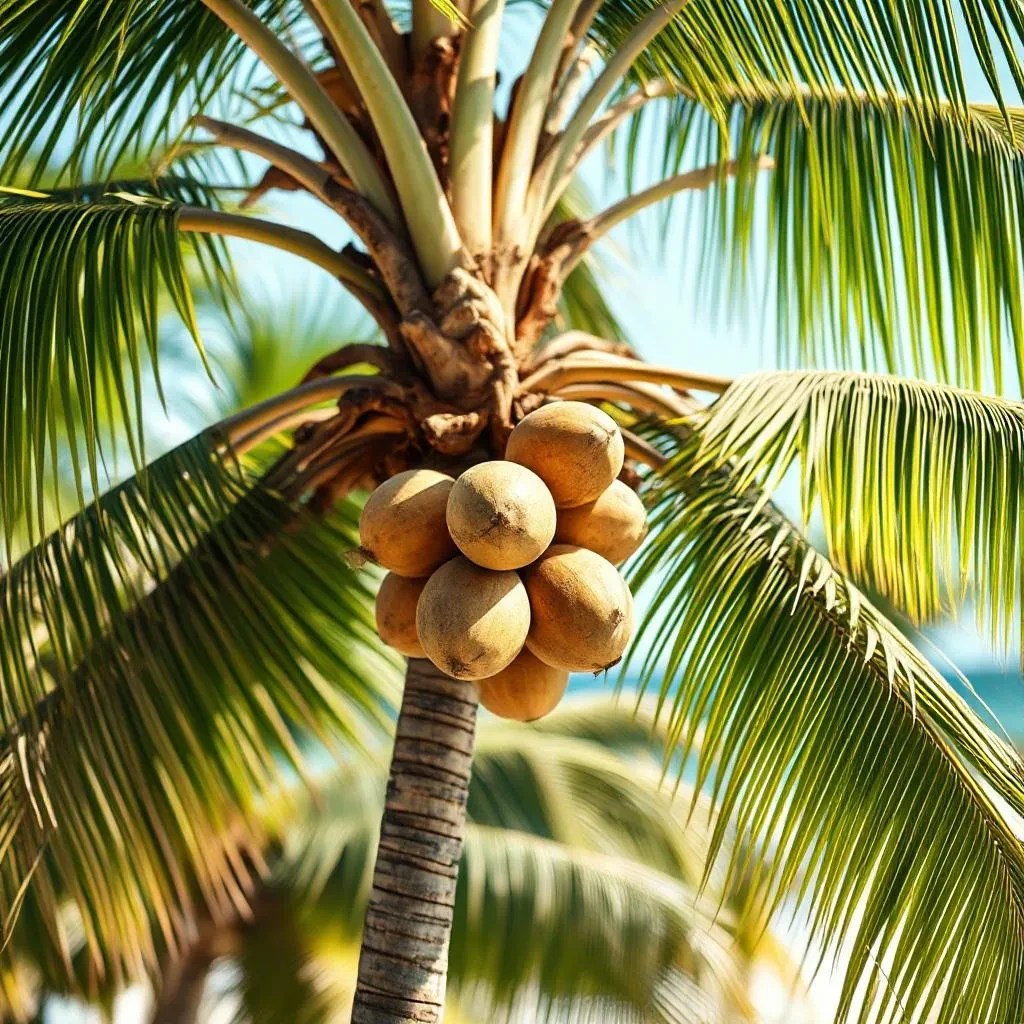
Common Name: Coconut Tree
Botanical Name: Cocos nucifera
Family: Palm family (Arecaceae)
Tropical evergreen perennial tree for Zones 10B to 12
PRECAUTION: May interact with diabetes medications. Not appropriate for all, consider consulting a doctor first. See section “ADDITIONAL INFORMATION > Animal Toxicity and Medicine Interactions”.
❗People having allergies is uncommon.
▷ LOOKALIKES 🔎
◦ High Plateau Coconut Palm (Beccariophoenix alfredii): Similar foliage to the Coconut Tree, this specific tree does not produce edible coconuts.
◦ Palmyra Palm (Borassus flabellifer): The fruit has a similar appearance to a coconut, oval in shape, however the frond leaves stay together and emerge from one location, as opposed to a coconut tree’s fronds with leaves appearing on either side of a main frond stem.
▷ APPEARANCE 🪞
Plant Description🌿🗒️
Tropical, branchless palm tree with a tall, smooth trunk reaching the maximum height of 60′ to 100′ and 11½” to 15½” diameter. The root bulb has 3,000 to 5,000 primary roots that branch out to anchor the tree in the soil. Fronds are arranged in a spiral pattern, reaching 13′ to 20′ length with deep green leaves appearing on each frond in an alternating pinnate pattern. Inflorescence reach to 11½” with clusters of small, yellow flowers. Coconut fruits form approximately 9 months after flowers appear. Fruits, known as coconuts, form in clusters, yellow or green exteriors, oval in shape. Planting a coconut from seed is mature enough to fruit after 6 to 10 years.
Dimensions, Root Depth, and Spacing 📏↔️
Height: 60′ to 100′
Width: Foliage 20′ to 30′, Trunk 11½” to 15½” diameter
Root Depth: 11½” to 40″ deep, Ideal minimum container size 7 gallon or 8 gallons. Larger containers allow plants to grow taller and wider!
Spacing: 23′ to 30′ apart
Flower Season and Fruit or Seed 🌻🍎🫘
Flower: Small, yellow,
Fruit: Yellow unripe, green to brown when ripe, oval in shape, 11″ to 18″ in length
Seed: Yellow to green, sphere shape, brown fibrous husk exterior, interior contains water and white, tender pulp, 6″ to 8″ length
▷ REPRODUCTION🌱
Sexuality: Monoecious
Pollination: Bees, butterflies, other beneficial pollinator insects, and bats. Also pollinated by the wind.
Growth Rate: Slow
Propagation:
◦ Roots: Not applicable
◦ Cuttings: Not applicable
Seed Germination: Soak for 2 to 3 days in a large container with clean water prior to planting. Soil pH 5.5 to 6.5 at preferably 68°F to 86°F, kept moist, however not wet or dry. Plant the coconut ⅓ of it’s length deep, emerges 1 month to 4 months after being sown. Germination rate of 80% to 90% (depending on producer).
Indoor Planting: Grow plant for 1 year prior to transplanting outside once temperature reached 68°F.
Outdoor Planting: Plant rooted seed after acclimating it to outside temperatures once they have reached 68°F.
▷ REQUIREMENTS❤️
Sunlight, Water, Fertilizer, and Pruning ☀️💧✂️
Sunlight: Prefers 6 to 8 hours of full sun
Note: Avoid aerial watering, which encourages fungal growth and disease.
Newly Planted: Plant potted plants in the garden 2 weeks after the last frost date and water every day for one week. Water every other day for the next two weeks, frequent watering helps stimulate new root growth and helps the plants stay alive and adjust their growth to the new environment during their time of stress.
Outdoor Watering: Water regularly during Summer (every 2 to 3 days) and less frequently in the Winter (once a week). Tiny pots and K-cup seed starters need water every day during Summer and every 2 days during Winter. Small pots require watering more often, especially if exposed to full sun, while large pots and shaded pots need less water.
Indoor Watering: Deep and infrequent, allowing for soil to dry on the top layer prior to more water.
Drought Resistance: Drought tolerant
Fertilizer: At the start of the growing season, apply fertilizer every 4 weeks to 6 weeks. Scatter evenly at the base of plants, avoiding clumps of fertilizer and preventing contact with stalks and stems. Large clumps of fertilizer won’t evenly supplement nutrients into the entire soil surface after it mixes with water from rain or irrigation. Fertilizer clumps around the base of plants may cause the main stalk to rot or have contact burns, which could damage or kill the plant. Do not throw fertilizer over plant tops, as the clumps of fertilizer caught in between leaf nodes and on foliage may either burn or rot the foliage.
Pruning: Avoid pruning during Winter as it may kill the plant. This same rule applies for the Fall in northern climates. Remove withered flowers, dead leaves, and leggy stems to enhance plant’s appearance. This also promotes new stems to appear with more leaves and flowers.
Soil, Planting, and Environment 🌄🏞️🏜️
Soil: Prefers well drained, sandy soil
pH: 5.5 to 6.5
Planting: When planting a potted plant, dig a hole that’s as deep as the pot and have each side of the plant at least as wide as the pot. For plants with wide roots, dig a hole that is twice the width of the pot and gently space out the root system and then cover with soil to promote healthy growth. Burying tangled roots could cause health issues or stunted growth.
Habitat: Native to the humid tropics in coastal lowlands and subtropical regions.
Temperature Preference and Temperature Tolerance🌡️
Temperature: 75°F to 85°F
Heat Tolerance: 95°F; Drought tolerant
Cold Tolerance: Young trees are especially sensitive to cold and may be damaged by temperatures below 32°F. Older trees withstand temperatures as low as 25°F. Mulch roots to retain water and to protect the root system from the cold during Winter. Keep dead leaves on the plant during Winter as a shield to protect the plant, then cut back in the Spring to promote new foliage growth. The day prior to a freeze, use blankets to cover the trunk and foliage to protect the plant from being injured or killed.
Salt, Wind, and Pollution Tolerance 🧂💨 ☣️
Salt Tolerance: High tolerance
Wind Tolerance: Moderate to Moderate high tolerance
Pollution Tolerance: Low tolerance to moderate tolerance
▷ ADDITIONAL INFORMATION📚
Description 📝
Cold sensitive palm tree native to southern Asia that can grow up to 98 feet tall and live for over 100 years. The trunk is flexible and typically withstands tsunamis.
Attract and Repel Wildlife🐝🦋🐦🐌🪰🐇🦌
Deer and Rodent Resitant🦌🐇🐁
Attracts: Bees, butterflies, other beneficial pollinator insects, birds, and bats
Repels: Not applicable
Diseases and Pests🐜🦠
Note: Proper care keeps plants resilient and healthy, preventing diseases and pests. This list details the potential threats, specific diseases and pests vary depending on environmental climate.
Diseases:
◦ Bud Rot: A fungal disease that infects the growing point of the tree, preventing it from producing new leaves or fruits.
◦ Coconut Lethal Yellowing: A fatal disease caused by a phytoplasma that can spread rapidly through coconut producers.
◦ Ganoderma Root Rot: Fungal disease that may lead to tree death.
◦ Phytophthora Root Rot: Fungal disease that causes root rot and decline.
◦ Ringspot Virus: Viral disease that causes yellowing of leaves and reduced fruit production.
Pests:
◦ Climbing Animals: These rodents may damage coconut trees by gnawing on the trunk and consuming the fruits.
◦ Leafminer: A moth whose larvae burrow into the leaves of coconut trees, causing damage and reducing photosynthesis.
◦ Red Mite: A tiny mite that feeds on the underside of coconut leaves, causing yellowing and stunting.
◦ Rhinoceros Beetle: A large beetle that can damage coconut trees by feeding on the trunk and branches.
◦ Scale: Parasite that infest a plant’s leaves and stems and suck sap from plants through their mouth parts. Heavy infestations cause yellowing or wilting of leaves, stunting or unthrifty appearance of the plants, and eventually death of all or part of the plant.
Animal Toxicity and Medicine Interactions ☠️❤️🩹
Animal Toxicity: Safe for dogs, cats, and horses.
Medicine Interactions:
Individuals may have a sensitivity or allergies to coconut, consult a healthcare professional first and proceed at own risk.
◦ Diabetes medication: Coconut might lower blood sugar levels. Taking coconut along with diabetes medications might cause blood sugar to drop too low. Monitor blood sugar closely.
WebMD Website – Coconut “Interactions”
Use and Harvest⚕️🌾
❗Never ingest essential oils, instead use organic fresh or dried herbs.
Use: Coconut trees are a valuable resource in many parts of the world, providing food, shelter, and economic benefits to millions of people.
◦ Fruit: Common resource with a variety of uses. The water inside the coconut is rich in electrolytes, refreshing, and hydrating. The tender pulp of the fruit is high in fat and fiber. Coconut water and the white pulp blended together creates coconut milk. Excellent additions to sauces, soups, salads, dressings, garnishes, trail mix, desserts, and beverages. Coconut milk may be used externally to moisturize dry skin, hydrate hair, and cleanse the skin.
◦ Coconut Oil: Culinary uses are for cooking, substituting for fats in recipes, and to add distinctive flavor. External uses are for moisturize dry skin and hydrate hair. Improve oral health by doing a preliminary brush of teeth with water to remove hard food particles, flossing also suggested. Then, swish with 1 tablespoon of coconut oil vigorously for approximately 1 minute, known as “oil pulling”. Either consume or spit out the oil, and then brush with toothpaste afterwards, flossing again. Coconut oil contains lauric acid, which has antimicrobial activity against many microorganisms.
Essential Oil: Click Here for Precautions, Instructions, and Dilution Ratios
Benefits: Antibacterial, antiviral, antifungal, anti-inflammatory (reduces internal and external swelling), antioxidant (protects cells), hydrating, moisturizing, improves energy, improves digestion, improves heart health, helps weight loss.
Dosing: Coconut pulp and dry shredded coconut are choking hazards! Add finely chopped coconut or grated coconut pulp to whole grain cereal, vegan yogurt, smoothies, puréed organic vegetables or organic fruit. ½ teaspoon each day for 4 to 6 months, 1½ teaspoons for 7 months to 2 years, 2 teaspoons for 3 years, 1 tablespoon each day for 4 years, 1½ tablespoons 5 to 8 years, 2 tablespoons each day for 9+ years. 2 to 3 tablespoons of shredded unsulfured coconut, ¼ cup uncooked coconut pulp, or 2 tablespoons of coconut oil each day for adults.. Coconut is high in fat, moderate how much is taken each day.
Click Here for How To Harvest, Dry, and Properly Store Herbs and Seeds
Harvest: Never harvest more than 20% of a plant’s leaves or roots!
◦ Fruit and Seed: 9 months after flowering, harvest the green to brown ripe coconuts. Keeps fresh for 1 to 2 weeks unopened in a cool, dark place. Fruits that have been opened are good for 2 to 3 days. Qualities to test are the heaviness, tapping the shell to hear if it is hollow (indicating ripe), shaking the coconut to listen for liquid inside (indicating ripe), and pressing the three round circles to test if they are soft and dry (indicating ripe) compared to the hard shell. Coconuts that have not been opened store at room temperature for 4 months. Coconuts that have been dehusked store in the fridge for 2 months. Coconuts are ready for harvest 6 to 10 years after planting the seed.
Aroma, Flavor, and Culinary Combinations🧼🍴
Aroma: Coconut fruit is tropical and sweet
Flavor: Tender pulp is fragrant, slightly sweet, with a rich and savory tropical taste
Culinary Combinations: Coconut compliments herbs and spices (thyme, rosemary, mint, oregano, cilantro, parsley, cinnamon, nutmeg, sage, chamomile, goldenseal, lavender, cardamom, coriander, tarragon, ginger, lemongrass, chives, elderberry), quinoa, whole wheat enriched pasta, wild rice, beans (sugar snap peas, green beans, chickpeas [garbanzos], black, pinto), legumes (lentils, mung beans), tofu, tempeh, mushrooms, nuts (roasted cashews, almonds, walnuts, pecans, and pine nuts), vegetables (arugula, cabbage, broccoli, cauliflower, Winter squash [pumpkin, butternut squash, acorn squash], Summer squash [zucchini, straightneck, and crookneck], sweet potato, red potato, white potato, eggplant, zucchini, garlic, bell pepper, carrot, beet, asparagus, brussels sprouts, radish, tomato, and cucumber), and fruits (avocado, raspberries, blackberries, blueberries, strawberries, cranberries, apricot, mango, citrus [lemon and lime], and figs)
Click Here to explore a comprehensive list of vitamins, minerals, and nutrients with function explanations, deficiency or excess symptoms, and vegan food source rankings (high, medium, low)
History 📜
Originating in Southeast Asia, the coconut tree was domesticated by Austronesians thousands of years ago. This tree was used for food, beverages, and to construct shelters, boats, and other structures.
Lifespan⏳
60 to 100 years longevity for life expectancy.
 Vegan Botany