
This is for informational purposes only. For medical advice or diagnosis, consult a professional.
🐝🦋 Popular pollinator attractor
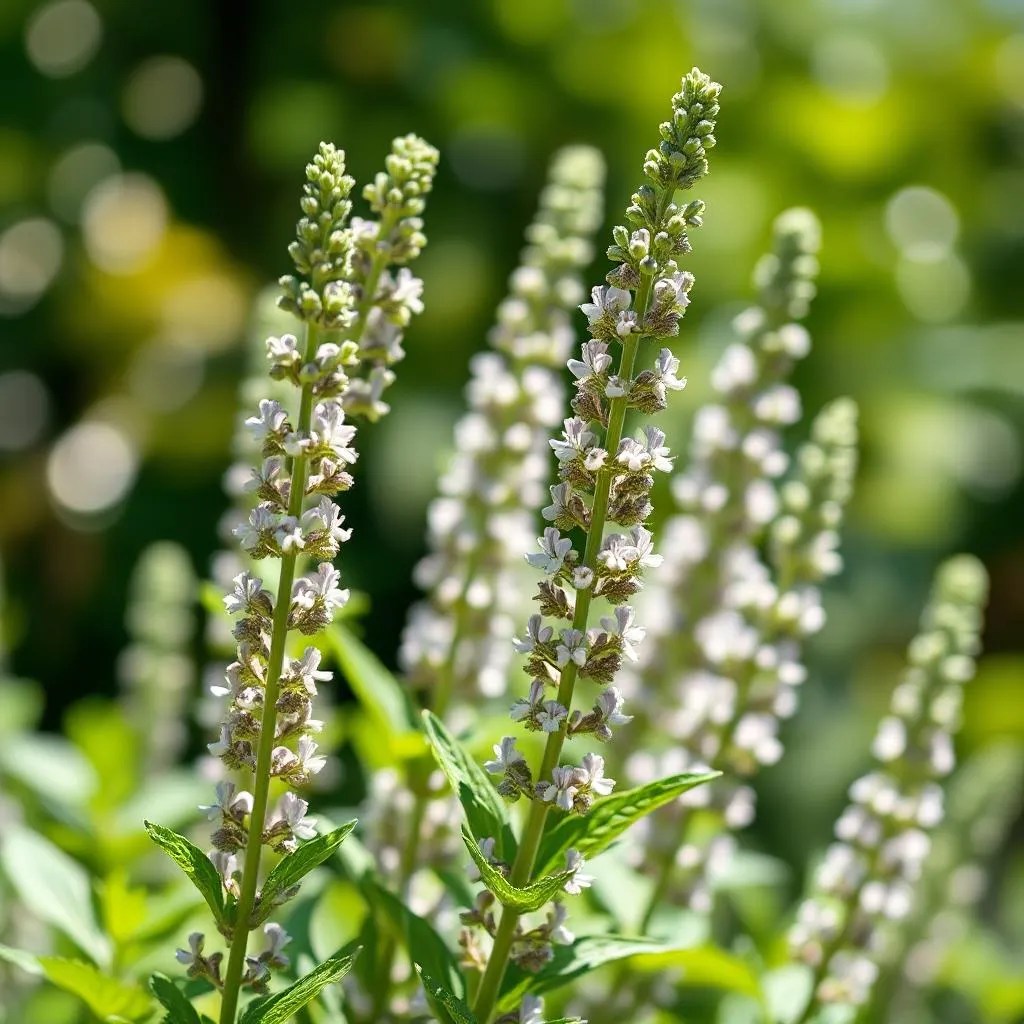
▷ IDENTIFICATION🔍
Common Name: Chia
Botanical Name: Salvia hispanica L.
Family: Mint family (Lamiaceae)
Nutritious herbaceous annual for Zones 9 to 12
PRECAUTION: May interact with hypertension (blood pressure) and diabetes medication, consider consulting a doctor first. Chia seeds are rich in fiber and may affect blood pressure and blood sugar.
▷ OTHER NAMES & LOOKALIKES 🏷️
Other Names 🏷️
◦ Chia Méxicana
Lookalikes 🔎
◦ Salvia leptostachys: Similar to Salvia hispanica L., also known as chia, in its leaves and flowers, including a subventricose calyx with a 3-veined upper lip.
▷ APPEARANCE 🪞
Plant Description🌿🗒️
Tall, single-stemmed herb that forms branches once mature. Leaves are green, lanceolate to ovate in shape with serrated edges, 1½” to 3″ length and 1⅕” to 2″ width, and are oppositely arranged on square stems. Flowers are tubular, two-lipped, purple in hue, appearing in small clusters as whorls on spike-like inflorescence. Mature plants may produce approximately 1,000 seeds.
Dimensions, Root Depth, and Spacing 📏↔️
Height: Reaches 3′ to 9′ high
Width: 12″ to 18″
Root Depth: Ideal minimum container size 7 gallon or 8 gallons. Larger containers allow plants to grow taller and wider!
Spacing: 12″ to 18″ apart
Flower Season and Fruit or Seed 🌻🍎🫘
Flower: Fragrant, purple clusters of flowers appearing along tall inflorescence
Seed: Small, oval seeds, 2mm length and 1.5 mm width. White, black, brown, or grey in color, sometimes with black or white spots or stripes
▷ REPRODUCTION🌱
Sexuality: Hermaphrodite
Pollination: Hummingbirds, butterflies, bees, and other beneficial pollinators
Growth Rate: Moderate
Propagation:
◦ Cuttings: Plant cuttings, ⅜” to ½” diameter (the wider the stem, the higher percentage of success) and 4″ to 6″ tall. Add cuttings to water and change the water every day for 1 month until roots form, later planting in soil in a container, or propagate by planting in soil during the Spring. Protect the new plant by placing it in partial sun or under a grow light until it has matured, avoiding direct sun.
Seed Germination: Soil pH 6.5 to 8.5 at preferably 77°F to 86°F, kept moist, however not wet or dry. Plant seed ⅛” to ¼” deep, emerges 2 to 14 days after being sown. Germination rate of 80% to 93% (depending on producer).
Outdoor Planting: Plant seed 12 weeks after to last frost date.
▷ REQUIREMENTS❤️
Sunlight, Water, Fertilizer, and Pruning ☀️💧✂️
Sunlight: Prefers 6 to 8 hours full sun
Note: Avoid aerial watering, which encourages fungal growth and disease.
Outdoor Watering: Water seeds and seedlings regularly. Tiny pots and K-cup seed starters need water every day during Summer and every 2 days during Winter. Small pots require watering more often, especially if exposed to full sun, while large pots and shaded pots need less water. After 1½ to 2 months, the plants may be transplanted and watered every 5 to 9 days during Summer. Winter watering is less frequent, approximately every 2 weeks. Overwatering may cause root rot.
Indoor Watering: Deep and infrequent, allowing for soil to dry on the top layer prior to more water
Drought Resistance: Semi-drought resistant once established
Fertilizer: Once or twice per year, apply fertilizer in either the Spring or Summer. Scatter evenly at the base of plants, avoiding clumps of fertilizer and preventing contact with stalks and stems. Large clumps of fertilizer won’t evenly supplement nutrients into the entire soil surface after it mixes with water from rain or irrigation. Fertilizer clumps around the base of plants make cause the main stalk to rot or have contact burns, which could damage or kill the plant. Do not throw fertilizer over plant tops, as the clumps of fertilizer caught in between leaf nodes and on foliage may either burn or rot the foliage
Pruning: Avoid pruning during Winter as it may kill the plant. This same rule applies for the Fall in northern climates. Remove withered flowers, dead leaves, and leggy stems to enhance plant’s appearance. This also promotes new stems to appear with more leaves and flowers.
Soil, Planting, and Environment 🌄🏞️🏜️
Soil: Prefers well-drained, sandy or loamy soil. Intolerant of wet soil
pH: 6.5 to 8.5
Planting: When planting a potted plant, dig a hole that’s as deep as the pot and have each side of the plant at least as wide as the pot. For plants with wide roots, dig a hole that is twice the width of the pot and gently space out the root system and then cover with soil to promote healthy growth. Burying tangled roots could cause health issues or stunted growth.
Habitat: Found in sandbars along streams, sunlit rocky slopes, brush fields, oak and pine woodlands.
Temperature Preference and Temperature Tolerance🌡️
Temperature: Prefers 70°F to 85°F; Mulch roots to retain water and prevent evaporation.
Heat Tolerance: Tolerable of 95°F for short-duration; Semi-drought tolerant once established
Cold Tolerance: 52°F, frost intolerant; Mulch to protect the root system during Winter. Keep dead leaves on the plant during Winter as a shield to protect the plant, then cut back in the Spring to promote new foliage growth.
Salt, Wind, and Pollution Tolerance 🧂💨 ☣️
Salt Tolerance: Low tolerance
Wind Tolerance: Low tolerance
Pollution Tolerance: Low tolerance
▷ ADDITIONAL INFORMATION📚
Description 📝
Chia seeds are a considered a psuedocereal as a highly nutritious, complete protein source which contains high levels of omega-3 and omega-6 fatty amino acids, fiber, and antioxidants. Chia is native to central and southern Mexico and Guatemala.
Attract and Repel Wildlife🐝🦋🐦🐌🪰🐇🦌
Deer and Rodent Resistant🦌🐇🐁
Attracts: Hummingbirds, butterflies, bees, and other beneficial pollinators
Repels: Not known
Diseases and Pests🐜🦠
Note: Proper care keeps plants resilient and healthy, preventing diseases and pests. This list details the potential threats, specific diseases and pests vary depending on environmental climate.
Chia plants are also resistant to fungi and disease-causing bacteria.
Diseases:
◦ Root Rot: Affects the roots of plants growing in wet or damp soil, may be lethal to both indoor and outdoor plants.
Pests:
◦ Aphids: Small, soft-bodied sucking insects which pierce plant tissues and draw out the juices.
◦ Mealybugs: Mealybugs feed on the juices from leaves and stems of plants, damaging a wide variety of host plants.
◦ Scale: Parasite that infest a plant’s leaves and stems and suck sap from plants through their mouth parts. Heavy infestations cause yellowing or wilting of leaves, stunting or unthrifty appearance of the plants, and eventually death of all or part of the plant.
◦ Snails and Slugs: They eat a wide variety of plants, including young seedlings, mature plants, and turfgrasses, and may cause damage to gardens and flower beds.
◦ Spider Mites: They feed by bruising plant cells with their small, whiplike mouthparts and ingesting the sap. Spider mites produce a fine silk webbing, often found at leaf nodes or the undersides of leaves, which may kill plants or cause serious stress.
◦ Whiteflies: Flying insects that suck the sap from plants.
Animal Toxicity and Medicine Interactions ☠️❤️🩹
Animal Toxicity: Safe for dogs, cats, and horses.
Medicine Interactions:
May interact with Hypertension (blood pressure) medication.
May interact with Diabetes medication.
Consider consulting a doctor first. Chia seeds are rich in fiber and may affect blood pressure and blood sugar.
WebMD Website – Chia
Use and Harvest⚕️🌾
❗Never ingest essential oils, instead use organic fresh or dried herbs.
Use: Nutritional additive or a binder for baked goods and other recipes.
Sprouts: Chia microgreens are healthy and may be ready for harvest in 1 to 2 weeks after planting. Add to stir-fry, salad, soup, etc.
Seeds: Dry chia seeds are choking hazard! Grind seeds or use seeds whole and mix with foods and beverages. Source of carbs, fiber, low protein, calcium, iron, and other nutrients. Raw chia seeds maintain their nutritional integrity better than cooked chia seeds. Ingest the most nutrition from seeds by thoroughly chewing the seeds. Add at the end of cooking, especially after a dish has cooled down to preserve the nutritional properties. Mix well in liquid immediately after adding to prevent clumping. Excellent for grits, organic oatmeal, vegan protein recipes, sauce, marinade, soup, stew, salad, dressing, dip, garnish, dessert, jam, baked goods, smoothie, and tea.
◦ Vegan Egg: 1 tablespoon of either flax, chia, plantago major seeds + 2.5 tablespoons of water. Allow to sit for a few hours, and utilize the nutrients and protein.
◦ Essential Oil: Click Here for Precautions, Instructions, and Dilution Ratios
Benefits: Antioxidant, anti-inflammatory (consume for internal and external inflammation), relieves swelling, arthritis, promotes cardiovascular (heart) health, liver health, and protects the nervous system. May help with hypertension (blood pressure) and diabetes (high blood sugar or ‘hyperglycemia’), research and consult a healthcare professional.
Dosing: Easier to consume for babies, young children, elderly, dogs, cats, and horses when seeds are mixed with puréed organic vegetables or organic fruits. People may also mix chia seeds in whole grain cereal, smoothies, or vegan yogurt. Each day, provide ½ teaspoon for babies 4 to 6+ months, 2 teaspoons to 1 tablespoon for children, and 2 tablespoons to 3 tablespoons for adults
Click Here for How To Harvest, Dry, and Properly Store Herbs and Seeds
Harvest: Never harvest more than 20% of a plant’s leaves or roots!
◦ Seeds: Harvest once the seeds have dried in the flower heads. Tie harvested stalks upside-down to dry in a shaded, well-ventilated area. Once stalks are dry, harvest the seeds and allow seeds to dry for 3 to 5 days. Follow harvesting techniques in the link above to extract and properly store the seeds. Ready for harvest 120 days after planting seeds.
Personal Experience: I add 2 tablespoons to 3 tablespoons of chia seeds each day (plus 3 tablespoons of unsulfured coconut) to Grape-nuts cereal each morning.
Aroma, Flavor, and Culinary Combinations🧼🍴
Mature leaves are slightly bitter.
Aroma: Flowers and leaves are mildly minty
Flavor: Seeds are mildly nutty
Culinary Combinations:
History 📜
Chia has been a food source for over 5,000 years and is highly regarded by the Mayan and Inca peoples.
Lifespan⏳
1 year longevity for life expectancy.
 Vegan Botany