
This is for informational purposes only. For medical advice or diagnosis, consult a professional.
🐝🦋 Popular pollinator attractor
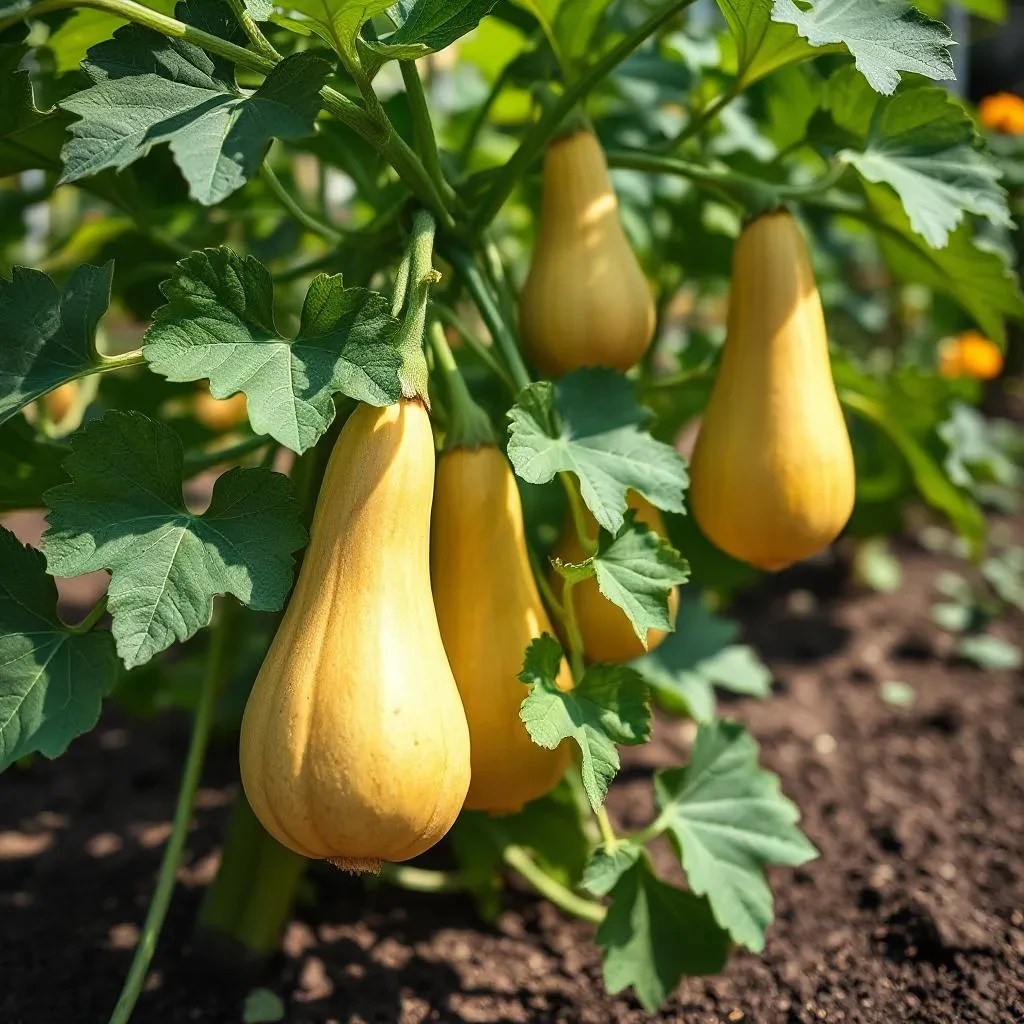
▷ IDENTIFICATION🔍
Common Name: Butternut Squash
Botanical Name: Cucurbita moschata ‘Butternut’
Family: Gourd family (Cucurbitaceae)
Squash yielding herbaceous annual for Zones 9 to 10
❗People having allergies is uncommon.
▷ LOOKALIKES
Lookalikes 🔎
◦ Summer Squash (Cucurbita pepo)(zucchini, yellow squash, etc.): Similar foliage to butternut squash, however grows from a centralized point rather than on many vines and produces green and yellow squash, many different cultivators have different shapes.
◦ Pumpkin (Cucurbita): Similar foliage, similarly grows on a vine with pumpkins available in orange, yellow, white, green, red, blue, gray, and pink, depending on the plant variety.
◦ Winter Melon (Benincasa hispida): The fruit is green or white and the plant has similar foliage to the butternut squash plant.
▷ APPEARANCE 🪞
Plant Description🌿🗒️
Herbaceous annual plant with vines that may reach 15′ length, stems and leaves have prickly surfaces. Leaves are large, green, light-veined, heart-shaped, with a lobed edge, and are arranged alternately. Flowers are yellow and have five petals. Fruit is large, pear-shaped, with smooth, orange to tan exterior (sometimes with brown spots), with a tender, orange interior. Seeds are flat, oval with a narrow end, with a white shell.
Dimensions, Root Depth, and Spacing 📏↔️
Height: 6′ to 8′
Width: 8′ to 15′
Root Depth: 3′ to 4′ deep; Ideal minimum container size 40 gallons. Larger containers allow plants to grow taller and wider!
Spacing: 8′ to 10′ apart
Flower Season and Fruit or Seed 🌻🍎🫘
Flower: Yellow flowers from Summer to Fall.
Fruit: Large, 5 to 10 pounds, shaped like a pear, orange to tan exterior (sometimes with brown spots), orange interior
Seed: 1″ length, white shell, oval with a narrow end
▷ REPRODUCTION🌱
Sexuality: Monoecious
Pollination: Bees, butterflies, and other beneficial pollinators
Growth Rate: Moderate
Propagation:
◦ Roots: Not applicable
◦ Plant ⅜” to ½” diameter (the wider the stem, the higher percentage of success) and 4″ to 6″ tall. Add cuttings to water and change the water every day for 1 month until roots form, later planting in soil in a container, or propagate by planting in soil during the Spring.
Seed Germination: Soil pH 6.0 to 6.8 at preferably 65°F to 70°F, kept moist, however not wet or dry. Plant seed 1″ deep, emerges 7 to 10 days after being sown. Germination rate of 80% (depending on producer).
Indoor Planting: Grow plant for 1 year prior to transplanting outside 2 weeks after last frost date.
Outdoor Planting: Plant seed 10 weeks after last frost date.
▷ REQUIREMENTS❤️
Sunlight, Water, Fertilizer, and Pruning ☀️💧✂️
Sunlight: Prefers 6 to 8 hours of full sun
Note: Avoid aerial watering, which encourages fungal growth and disease.
Outdoor Watering: Water regularly during Summer (every 1 to 3 days) and less frequently in the Winter (once a week). Soil should be kept moist. Tiny pots and K-cup seed starters need water every day during Summer and every 2 days during Winter. Small pots require watering more often, especially if exposed to full sun, while large pots and shaded pots need less water.
Indoor Watering: Deep and infrequent, allowing for soil to dry on the top layer prior to more water.
Drought Resistance: Drought tolerant once established, produces healthier fruits with regular watering.
Fertilizer: At the start of the growing season, apply fertilizer every 2 weeks to 6 weeks. Scatter evenly at the base of plants, avoiding clumps of fertilizer and preventing contact with stems and leaves. Large clumps of fertilizer won’t evenly supplement nutrients into the entire soil surface after it mixes with water from rain or irrigation. Fertilizer clumps around the base of plants may cause the stems to rot or have contact burns, which could damage or kill the plant. Do not throw fertilizer over plant tops, as the clumps of fertilizer caught in between leaf nodes and on foliage may either burn or rot the foliage.
Pruning: Remove withered flowers, dying stems, leggy stems, and dead leaves to enhance plant’s appearance. This also promotes new stems to appear with more leaves and flowers.
Soil, Planting, and Environment 🌄🏞️🏜️
Soil: Prefers well-drained, loamy soil
pH: 6.0 to 6.8
Planting: When planting a potted plant, dig a hole that’s as deep as the pot and have each side of the plant at least as wide as the pot. For plants with wide roots, dig a hole that is twice the width of the pot and gently space out the root system and then cover with soil to promote healthy growth. Burying tangled roots could cause health issues or stunted growth.
Habitat: Butternut squash is a member of the gourd family, like pumpkins, and originated from wild squash from the area between Mexico and Guatemala.
Temperature Preference and Temperature Tolerance🌡️
Temperature: 50°F and 90°F
Heat Tolerance: 90°F; Drought tolerant once established
Cold Tolerance: Tolerates 40°F, however growth is slowed; Might be damaged by temperatures 35°F or colder for several hours.
Salt, Wind, and Pollution Tolerance 🧂💨 ☣️
Salt Tolerance: Low to moderate tolerance
Wind Tolerance: Moderate tolerance
Pollution Tolerance: Moderate tolerance
▷ ADDITIONAL INFORMATION📚
Description 📝
Butternut squash is a beautiful trailing vine that produces a common Winter squash grown in many parts of the world. This plant produces a nutritious, mildly sweet vegetable that is crunchy when raw and soft when cooked, commonly used for a variety of dishes.
Attract and Repel Wildlife🐝🦋🐦🐌🪰🐇🦌
Deer and Rodent Resistant🦌🐇🐁
Attracts: Bees, butterflies, and other beneficial pollinators
Repels: Not applicable
Diseases and Pests🐜🦠
Note: Proper care keeps plants resilient and healthy, preventing diseases and pests. This list details the potential threats, specific diseases and pests vary depending on environmental climate.
Diseases:
◦ Bacterial wilt: A bacterial disease that causes wilting and death.
◦ Powdery Mildew: Disease caused by a fungus due to overwatering or overcrowding, making the plant vulnerable to other pests and diseases.
Pests:
◦ Squash Bug: Insects that suck sap from the plant, causing yellowing and stunting.
◦ Squash Vine Borer: This insect damages the plant’s stems and reduce fruit production.
Animal Toxicity and Medicine Interactions ☠️❤️🩹
Animal Toxicity: Safe for dogs, cats, and horses.
ASPCA Website – Toxic and Non-Toxic Plants “Butternut Squash”
Medicine Interactions:
Individuals may have a sensitivity or allergies to butternut squash, consult a healthcare professional first and proceed at own risk.
Use and Harvest⚕️🌾
Use:
◦ Flowers: Edible flowers are used raw, stuffed and baked, batter fried, or used as a garnish and have a low amount of nutrients.
◦ Leaves: Squash leaves may be eaten steamed, stir-fried, or boiled and are a decent source of vitamins and nutrients.
◦ Fruit: A mildly sweet vegetable with a soft crunch when enjoyed raw or soft when cooked. Excellent in salads, soups, stews, steamed, boiled, baked, stir fried, added to casseroles, desserts, used as a garnish, and with other recipes. Source of high fiber, high vitamin A, vitamin C, additionally has carbohydrates, sugar, calcium, copper, iron, manganese, magnesium, phosphorus, potassium, vitamin B1 (Thiamin), B2 (Riboflavin), B3 (Niacin), B5 (Pantothenic Acid), B6 (Pyridoxine), B9 (Folate), and vitamin E.
Benefits: Antioxidant (protects cells), anti-inflammatory (reduces internal and external swelling), strengthens immunity, improves digestion, eye health, cardiovascular health (heart health), complexion, and skin health, regulates blood sugar, and helps weight loss.
Dosing: ¾ cup butternut squash maximum each day for adults; 1 cup of butternut squash contains 127% suggested day’s value for vitamin A, which may cause hair loss and other health problems in excess.
Click Here for How To Harvest, Dry, and Properly Store Herbs and Seeds
Harvest: Never harvest more than 20% of a plant’s leaves or roots!
◦ Flowers: From Summer to Fall
◦ Leaves: Any time of year, harvest healthy, undamaged leaves
◦ Fruit: Summer to Fall. Butternut squash is ready to harvest 105 to 110 days after planting the seed. Fruit keeps fresh for 1 month to 3 months if stored in a cool, dark place.
◦ Seeds: Harvest the seeds from the interior of the fruit and gently wash away the fruit and remove the stringy pieces, a strainer is suggested. Follow harvesting techniques in the link above to extract and properly store the seeds.
Aroma, Flavor, and Culinary Combinations🧼🍴
Aroma: Flowers have no scent; Cooked butternut squash fruit has a mildly sweet, savory aroma that is similar to pumpkin
Flavor: Mildly sweet and savory, similar to pumpkin
Culinary Combinations: Butternut squash compliments herbs and spices (thyme, rosemary, oregano, cilantro, parsley, sage, cardamom, coriander, chives, ginger), quinoa, whole wheat enriched pasta, wild rice, beans (sugar snap peas, green beans, chickpeas [garbanzos], black, pinto), legumes (lentils, mung beans), tofu, tempeh, mushrooms, nuts (roasted cashews, almonds, walnuts, pecans, and pine nuts), vegetables (arugula, cabbage, broccoli, cauliflower, Winter squash [pumpkin, acorn squash], Summer squash [zucchini, straightneck, and crookneck], red potato, white potato, eggplant, zucchini, garlic, lemongrass, bell pepper, carrot, beet, asparagus, brussels sprouts, radish, tomato, and cucumber), and fruits (avocado, raspberries, blackberries, blueberries, strawberries, cranberries, apricot, mango, citrus [lemon and lime], and figs)
History 📜
Native Americans have cultivated butternut squash for at least 6,000 years. This nutritious, mildly sweet gourd tastes similar to pumpkin, and used for culinary and ornamental use.
Lifespan⏳
Usually 1 year longevity for life expectancy, may live for 2 or more years in an ideal environment.
 Vegan Botany