
This is for informational purposes only. For medical advice or diagnosis, consult a professional.
🐝🦋 Popular pollinator attractor
🛡️Protect with cover or bring young plants indoors during Winter
▷ IDENTIFICATION🔍
Common Name: Avocado ‘Hass’
Botanical Name: Persea americana ‘Hass’
Family: Laurel family (Lauraceae)
Tropical, evergreen perennial broadleaf tree for Zones 9a to 11b
PRECAUTION: May interact with blood clotting medications. Not appropriate for all, consider consulting a doctor first. See section “ADDITIONAL INFORMATION > Animal Toxicity and Medicine Interactions”.
▷ OTHER NAMES & LOOKALIKES 🏷️
Other Names 🏷️
The Latin word “persea” is translated as “always”, making this plant a wonderful specimen tree and food source for generations of family.
Lookalikes 🔎
◦ Persea americana ‘Maluma Hass’: Shiny, pear-shaped fruit that turns purple-black when ripe, similar to Hass avocados but with a flat-based seed.
◦ Persea americana ‘Gwen’: A Guatemalan variety that’s similar in taste and appearance to Hass avocados, but slightly larger. Gwen avocados have thick, dark green skin that’s easy to remove.
▷ APPEARANCE 🪞
Plant Description🌿🗒️
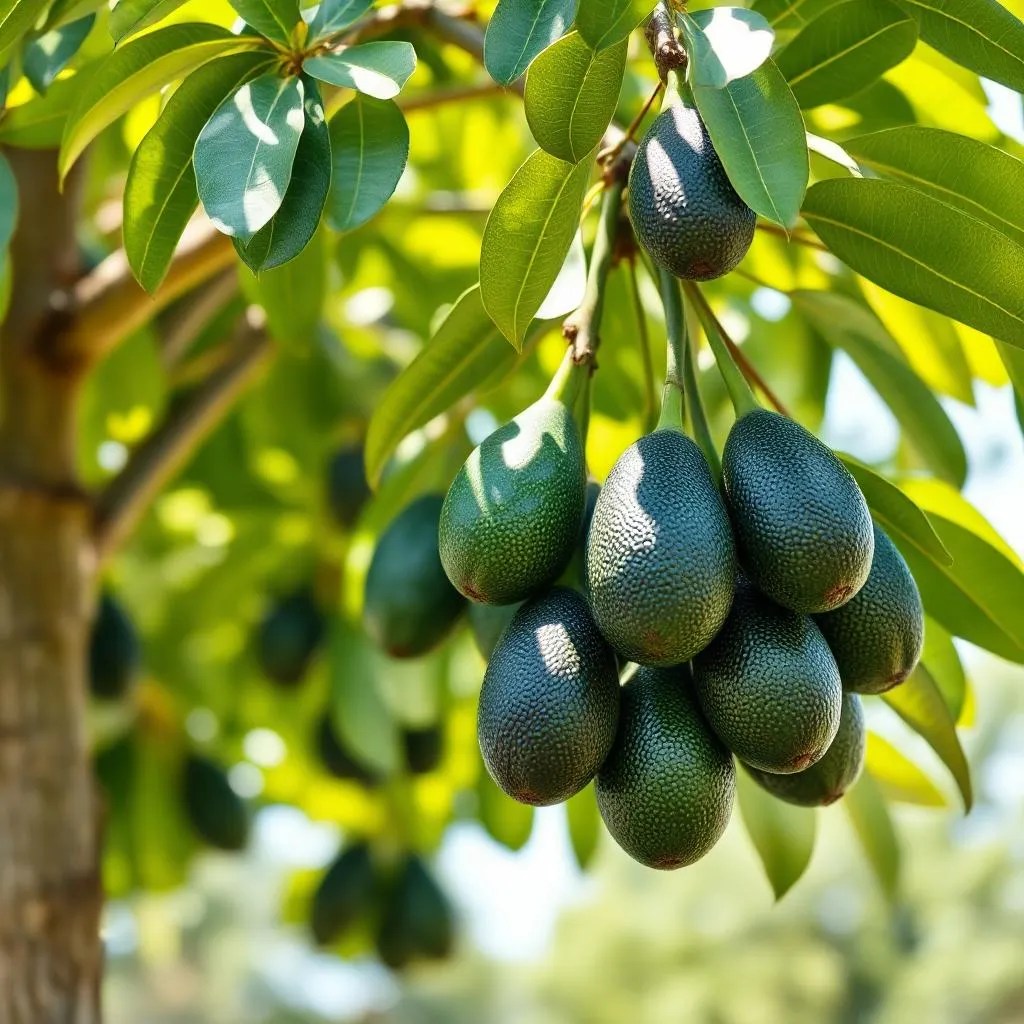
A beautiful addition as a shade tree to provide a home to wildlife or a generous garden contributor of fruits and seeds. Tree bark is rough and light grey-brown, developing texture as the tree ages. Leaves are dark green and glossy on top, light green underneath, alternately arranged, with leaf veins that are bright green-yellow. Flowers are small, ivory-green, occurring in clusters at the ends of branches. Hass avocado trees have “Type A” flowers which produce pollen in the morning and are receptive to pollen in the afternoon. Fruit production happens within 3 to 4 years for a nursery-bought grafted tree, compared to a tree grown from a seed from a store which may take 5 to 15 years to produce fruit. Fruit is large, oval or pear-shaped, bumpy-textured exterior, forming green and later ripening black. Avocado interior is smooth and creamy with a rich nutty flavor. Each fruit has one round, brown seed in the center.
Dimensions, Root Depth, and Spacing 📏↔️
Height: 15′ to 35′
Width: 15′ to 20′
Root Depth: 23″ deep; Ideal minimum container size 15 gallon or 25 gallon. Larger containers allow plants to grow taller and wider!
Spacing: 20′ apart
Flower Season and Fruit or Seed 🌻🍎🫘
Flower: Ivory-green flowers from February to May
Fruit: Oval or pear shaped, green when unripe, black when ripe, weighing 10 ounces to 12 ounces, 3″ to 8″ length. Harvest when fully developed and green. Allow to ripen at room temperature and refrigerate for up to 2 weeks once ripe
Seed: Large, brown, round seed, 2″ to 2½” diameter
▷ REPRODUCTION🌱
Sexuality: Monoecious
Pollination: Hass avocado trees have what’s called “Type A” flowers. This means their flowers produce pollen in the morning and are receptive to pollen in the afternoon. Pollinated by bees and other beneficial insects
Growth Rate: Slow to Moderate
Propagation:
◦ Layering: Select a thick stem that is long enough to lay in nearby container of soil. Remove leaves from the middle section of the stem, this part of the stem will be planted carefully and directly into the soil while still attached to the plant. Water as is necessary to keep soil consistently moist, especially during the Summer. Roots should form on the buried stem in a month, and may thereafter be cut and replanted into individual pots.
◦ Cuttings: Plant hardwood or softwood cuttings, ⅜” to ½” diameter (the wider the stem, the higher percentage of success) and 4″ to 6″ tall. Most of the leaves should be removed from the bottom ¾ of the plant, keeping a few mature leaves on the top. Add cuttings to water and change the water every day for 1 month until roots form, later planting in soil in a container, or propagate by planting in soil during the Spring. Protect the new plant by placing it in partial sun or under a grow light until it has matured, avoiding direct sun.
Seed Germination: Wash the seed and soak in clean water for 24 to 48 hours. After, use a knife to remove the thin brown skin. This deters bacterial growth which may damage or kill the sapling. Pierce the seed with 3 toothpicks symmetrically on each side and place into a cup water that covers half of the seed. Avocado seeds germinate within 2 weeks to 6 weeks. Keep in a shaded, bright window and change water daily. Direct sunlight may cause leaves to curl, a translucent white curtain helps protect the plant from amplified sunlight. Once the seed has produced roots at least 4″ length, carefully plant into soil and water every other day, keeping soil moist though avoiding wet soil. Plant seed by covering the roots with soil and keeping the main stem uncovered. Prefers soil pH 5.0 to 7.0 at preferably 70°F to 76°F. Germination rate of 80% (depending on producer).
Indoor Planting: Grow plant for 1 year prior to transplanting outside 10 weeks after last frost date
Outdoor Planting: Plant seed 10 weeks after to last frost date
▷ REQUIREMENTS❤️
Sunlight, Water, Fertilizer, and Pruning ☀️💧✂️
Sunlight: Prefers 6 to 8 hours full sun
Note: Avoid aerial watering, which encourages fungal growth and disease.
Outdoor Watering: Avocado trees that are newly planted need water every 2 to 3 days. Adult avocado trees need water once every week, at least 2 inches of water. Droughts, hot Summers, and fruiting trees may require as much as 20 gallons of water every day. Water less frequently in the Winter (once a week)
Indoor Watering: Deep and infrequent, allowing for soil to dry on the top layer prior to more water
Drought Resistance: Drought tolerant once established
Fertilizer: At the start of the growing season, apply fertilizer every 4 weeks to 6 weeks. Scatter evenly at the base of plants, avoiding clumps of fertilizer and preventing contact with trunk and stems. Large clumps of fertilizer won’t evenly supplement nutrients into the entire soil surface after it mixes with water from rain or irrigation. Fertilizer clumps around the base of plants make cause the main trunk to rot or have contact burns, which could damage or kill the plant. Do not throw fertilizer over plant tops, as the clumps of fertilizer caught in between leaf nodes and on foliage may either burn or rot the foliage
Pruning: Avoid pruning during Winter as it may kill the plant. This same rule applies for the Fall in northern climates. Remove withered flowers, dead leaves, and leggy stems to enhance plant’s appearance. This also promotes new stems to appear with more leaves and flowers
Soil, Planting, and Environment 🌄🏞️🏜️
Soil: Prefers well-drained, rich, moist loamy soil
pH: 5 to 7
Planting: When planting a potted plant, dig a hole that’s as deep as the pot and as wide as the root base. For plants with wide roots, dig a hole that is twice the width of the pot and gently space out the root system and then cover with soil to promote healthy growth. Burying tangled roots could cause health issues or stunted growth. The soil should be gently pressed in or watered in to fill the air pockets, preventing soil from collapsing in when watering or raining. Unplanted roots add to the stress of plants and could cause health problems or diseases. Cover every root with soil and smooth the soil’s surface.
Habitat: The Gulf Coast, southern California, and Florida. Found in rainy, tropical, evergreen or montane forest, and lower slopes of rainforests, with well-drained soils.
Temperature Preference and Temperature Tolerance🌡️
Temperature: Prefers 60°F to 85°F
Heat Tolerance: Temperatures above 100°F may scorch the plant, especially young plants, and may reduce the plant’s ability to produce fruit. Drought tolerant once established
Cold Tolerance: Young trees are especially sensitive to cold and may be damaged by temperatures below 32°F. Older trees withstand temperatures as low as 28°F. Mulch roots to retain water and to protect the root system from the cold during Winter. Keep dead leaves on the plant during Winter as a shield to protect the plant, then cut back in the Spring to promote new foliage growth
Salt, Wind, and Pollution Tolerance 🧂💨 ☣️
Salt Tolerance: No salt tolerance; The least salt tolerant crop plant
Wind Tolerance: Low tolerance
Pollution Tolerance: Not known
Chill Hours❄️
Most varieties do not require chill hours, however specific cold tolerant cultivators require 100 to 200 chill hours.
▷ ADDITIONAL INFORMATION📚
Description 📝
Avocado is one of the most salt-sensitive crops and is also one of the most valued crops for every acre. Larger, bright green avocados may be Florida Avocados, which are bright green when ripe rather than how a Hass Avocado is black when ripe. Florida Avocados are usually 6½” length and weight anywhere from a 1½ pounds to 6½ pounds.
Attract and Repel Wildlife🐝🦋🐦🐌🪰🐇🦌
May be susceptible to Deer and Rodents🦌🐇🐁
Attracts: Bees, butterflies, and other beneficial pollinators
Repels: Not known
Diseases, Pests, and Pests🐜🦠
Note: Proper care keeps plants resilient and healthy, preventing diseases and pests. This list details the potential threats, specific diseases and pests vary depending on environmental climate.
Diseases:
◦ Armillaria Root Rot: Widespread disease that can cause avocado trees to decline, with leaves turning yellow and falling off prematurely.
◦ Persea mite: Pest that’s especially damaging to Hass avocados, as well as other varieties.
◦ Phytophthora Canker: Common disease that infects leaves and shoots, causing dark lesions on leaf edges, browning, and leaf tips to die. It’s spread by spores from infected plants landing on healthy ones.
◦ Phytophthora Root Rot: This infection is caused by the fungus “Cinnamon Fungus” (P. cinnamomi). Symptoms are worse in wet conditions.
◦ Verticillium Wilt: A disease that clogs a plant’s vascular system with fungal cells, which then spread and cause the plant to die slowly. An early symptom is sudden wilting on one side of the plant, followed by leaves turning brown.
Problems: Small leaves turning yellow or green-yellow, reduced number of leaves, small branches dying back, and stunted growth, which could be caused by environmental or nutritional influence.
Pests:
◦ Aphids: Small, soft-bodied sucking insects which pierce plant tissues and draw out the juices.
◦ Mealybugs: Mealybugs feed on the juices from leaves and stems of plants, damaging a wide variety of host plants.
◦ Thrips: May spread plant viruses called tospoviruses, which cause diseases such as tomato spotted wilt, impatiens necrotic spot, and iris yellow spot virus. Thrips suck the sap from leaves, flowers, and buds, resulting in discolored, distorted, or stunted growth.
◦ Scale: Parasite that infest a plant’s leaves and stems and suck sap from plants through their mouth parts. Heavy infestations cause yellowing or wilting of leaves, stunting or unthrifty appearance of the plants, and eventually death of all or part of the plant.
◦ Spider Mites: They feed by bruising plant cells with their small, whiplike mouthparts and ingesting the sap. Spider mites produce a fine silk webbing, often found at leaf nodes or the undersides of leaves, which may kill plants or cause serious stress to them.
Animal Toxicity and Medicine Interactions ☠️❤️🩹
Animal Toxicity: Toxic to cats and horses. Avocado without the seed is safe for dogs in small moderation.
ASPCA Website – Toxic and Non-Toxic Plants “Avocado”
Medicine Interactions:
Individuals may have a sensitivity or allergies to Avocado, consult a healthcare professional first and proceed at own risk.
◦ Warfarin (Coumadin): Warfarin is a blood thinner used to slow blood clotting that blocks the body’s ability to use vitamin K, which is a vitamin that helps clot blood. Avocado, which has vitamin K, may decrease the effects of warfarin. Decreasing the effects of warfarin might increase the risk of clotting. Monitor blood levels regularly. The dose of warfarin might need to be changed.
WebMD Website – Avocado “Interactions”
Use and Harvest⚕️🌾
❗Never ingest essential oils, instead use organic fresh or dried herbs.
Use:
◦ Fruit: The smooth, rich, creamy, mildly nutty flavor is excellent for salad, dressing, dips, spreads, desserts, and smoothies.
◦ Essential Oil: Click Here for Precautions, Instructions, and Dilution Ratios
Benefits: Anti-inflammatory (reduces internal and external swelling), antioxidant (protects cells), stimulates digestion, and moisturizing. Fruit is a nutrient dense food that’s a source of calories, omega fats, fiber, protein, vitamin C, vitamin E, vitamin B1 (thiamin), vitamin B2 (riboflavin), vitamin B3 (niacin), vitamin B5 (pantothenic acid), vitamin B6 (pyridoxine), vitamin B9 (folate), vitamin K, copper, magnesium, manganese, phosphorus, potassium, and zinc.
Dosing:1 spoonful of mashed avocado for 4 to 6 months. Two diced avocado slices each day for 6+ months..¾ of a medium avocado, diced, each day for 9+ months. 1 ripe avocado each day for adults.
◦ Fruits: Harvest when fruits are fully sized and green, from February to September. Fruit ripens in 5 to 14 days. Keep in fridge once fruit is dark or soft to preserve for more days. Avocados are ready for harvest 5 to 13 years after planting from seed.
◦ Seeds: Seeds do not store well, plant immediately! Soak seed for 24 to 48 hours, later removing the brown exterior. Insert 3 toothpicks and place the seed halfway in a cup of water and keep in a shaded sunny spot (not direct sun, the sunlight amplified through the glass may burn a plant). Change water daily, plant into soil and keep moist after the roots are 4″ length.
Aroma, Flavor, and Culinary Combinations🧼🍴
Aroma: Mildly herbaceous and creamy
Flavor: Smooth and creamy with a rich nutty flavor
Culinary Combinations: Avocado compliments herbs and spices (thyme, sage, rosemary, oregano, parsley, sweet basil, thai basil, mint, cilantro, cumin, cardamom, coriander, lemongrass, chives, ginger), quinoa, whole wheat enriched pasta, wild rice, beans (sugar snap peas, green beans, chickpeas [garbanzos], black, pinto), legumes (lentils, mung beans), tofu, tempeh, mushrooms, nuts (roasted cashews, almonds, walnuts, pecans, and pine nuts), vegetables (arugula, cabbage, broccoli, cauliflower, Winter squash [pumpkin, butternut squash, acorn squash], Summer squash [zucchini, straightneck, and crookneck], sweet potato, red potato, white potato, eggplant, zucchini, garlic, bell pepper, carrot, beet, asparagus, brussels sprouts, radish, tomato, and cucumber), and fruits (raspberries, blackberries, blueberries, strawberries, cranberries, apricot, mango, citrus [lemon and lime], and figs)
Click Here to explore a comprehensive list of vitamins, minerals, and nutrients with function explanations, deficiency or excess symptoms, and vegan food source rankings (high, medium, low)
History 📜
Avocados are believed to have originated in Central America and Mexico between 7,000 and 5,000 B.C. . Evidence suggests that humans cultivated avocados as early as 500 B.C.
Lifespan⏳
15 years to 200 years longevity for life expectancy. A very well taken care of family avocado tree may live to be as old as 400 years!
 Vegan Botany