
Plant Classification

Plant Kingdom (Plantae) – 280,000+ plant members.
❗Without bees, many of our plants will die.
Click Here to learn about plants to support bees and other beneficial pollinators.
Cryptogams are without seeds.
Phanerogams are with seeds.
Cryptogam (without seeds)
Algae (Chlorophyta) have no “true” leaves, stems, or roots.. Algae structures are called blades, fronds, and thalli.
Mosses and Liverworts (Bryophyta) have some leaf and root-like structures.
Ferns and Horsetails (Pteridophyta) have leaves, stems, and roots.
Phanerogam (with seeds)
Gymnosperm have no flowers.
◦ Conifers (Pinophyta) have needle-like leaves.
◦ Ginkgos (Ginkgophyta) and Cycads (Cycadophyta) have wide leaves.
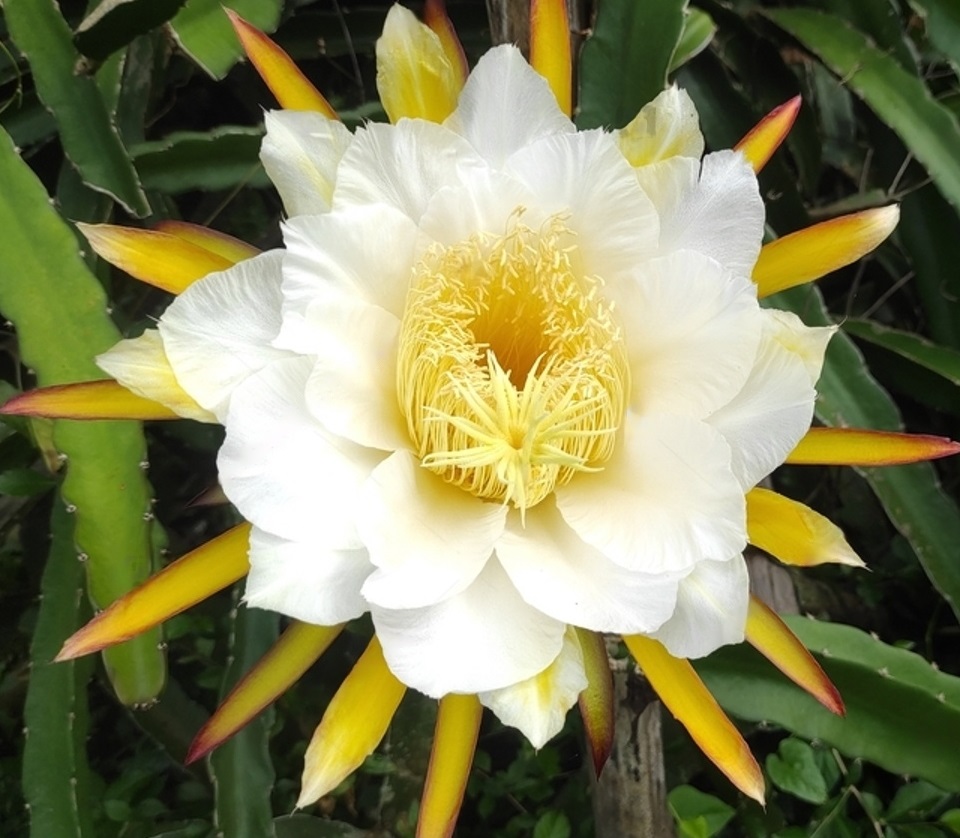
Angiosperm (Magnoliophyta) have flowers.
Spermatophytes (Two different phanerogam classifications with seeds)
Gymnosperm is a plant with seeds that are unprotected, such as cones of conifers. Gymnosperms include the conifers, cycads, and ginkgo.
Angiosperm is a plant with seeds that are protected by a carpel (ovary, stigma, and usually a style). Most plants are Angiosperms, such as herbaceous plants, shrubs, grasses, and most trees.
Flowers
 Vegan Botany